Robert Dale Owen Quotes
We can constitutionally extirpate slavery at this time.
Owen, Robert Dale. "To the President of the United States." The Policy of Emancipation: In Three Letters to the Secretary of War, the President of the United States, and the Secretary of the Treasury, J. B. Lippincott & Co., 1863.


See {613644} for the earlier decree which this modified.


Lincoln had promised amnesty to Southerners who would pledge loyalty to the Union. What many feared was that this would include slave owners re-enslaving their former "property," or that the government would allow them to do so in order to stop the rebellion.

The Mystery was for many years the only Black Newspaper in America.

The Act was passed by the Pennsylvania General Assembly whose clerk interestingly enough was Tom Paine.

The first anti-slavery newspaper published in the United States & the first journal in America to advocate immediate, unconditional emancipation

One of the many complaints that many people made at the time about Smith and his Mormons was that they opposed slavery. In fact, Smith not only opposed it be had a plan for compensating the slave owner and a method for paying for it. Smith was not advocating the kinds of personal lifestyle issues of his church the way modern religious leaders do, but was concerned with the much larger issues of expansionism, corruption of the courts and judiciary, and land distribution. He was a classic reform candidate in that sense. Smith had written to most of the then likely Presidential candidates of both major parties asking for their position on the Mormons who were facing persecution wherever they went. None of the politicians would make any satisfactory commitments. Smith took Direct Action and became the only major religious official to have run for the Presidency of the United States until Pat Robertson tried and failed in 2000. Smith’s assassination shortly thereafter cut his run for the Presidency short before it made much headway and politically he had no chance to affect the race.
In this quotation Lincoln got out of the rhetorical trap that Douglas had set for him by disclosing his personal preferences as opposed to the positions that Douglas had accused him of being pledged to. See {615827}.

Washington was from Virginia, the largest of the slave states, and he himself owned slaves. In his will he emancipated all his slaves. Most of his fellow Southern Slave owners however not only disagreed about the abolition of slavery but were adamant that slavery spread so that the abolitionists never attain a majority.
Note that Lincoln did not justify the emancipation proclamation on moral or humanitarian grounds, but on the grounds of military necessity.


One of the most amazing things about Abraham Lincoln is the way he grew and matured over time. In 1854 he was not sure that the Negro could be the equal of the white. As he met more Black leaders, saw more, reflected more, and had more responsibility, he grew and developed his views on race. But it was statements like this that led to the great distrust that the very strong abolitionists like Wendell Phillips had in him.

His family was one of the wealthiest in Rhode Island. He called in the entire family and he formally read the deed. The family itself had actually been active in the slave trade under John, his oldest brother, so this deed was very shocking to them. Moses became a leading abolitionist in Rhode Island and John the major defender of slavery in the state. Despite that, the brothers actually remained close.

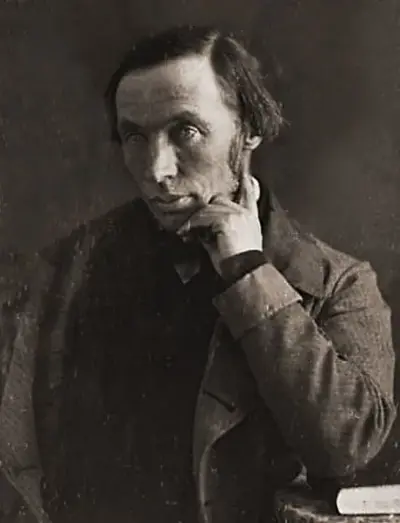
Robert Dale Owen was a Scottish-born Welsh social reformer who immigrated to the United States in 1825, became a U.S. citizen, and was active in Indiana politics as member of the Democratic Party in the Indiana House of Representatives (1835–39 and 1851–53) and represented Indiana in the U.S. House of Representatives (1843–47). As a member of Congress, Owen successfully pushed through the bill that established Smithsonian Institution and served on the Institution's first Board of Regents. Owen also served as a delegate to the Indiana Constitutional Convention in 1850 and was appointed as U.S. chargé d'affaires (1853–58) to Naples.
