Gregory I Quotes
Do not now let them sacrifice animals to the Devil, but to the praise of God kill animals for their own eating…. So while some outward joys are retained for them, they may more readily respond to the inward joys. For from obdurate minds it is undoubtedly impossible to cut off everything at once, because he who strives to ascend to the highest place rises by degrees or steps and not by leaps.
This is an example of one of the reasons he was called “Gregory the Great”. At a time when most church leaders were rigid ideologues, this pope realized that many pagan customs and traditions were embedded in Christian society and it would not successful to try and ban all the pagan customs immediately. So he urged starting where the people were and making gradual changes to finally reach a more Christian celebration pattern. Not only was he successful, but somehow, his strategy was consistent with modern behavior change psychological principles.
Gregory I, ~540-604, (Gregory the Great), Roman Catholic Pope, Letter to Abbot Mellitus, 601
Sourced by: Eigen's Political and Historical Quotations

Those who argue that the United States is a Christian country often point to this quotation to illustrate the fundamental religious purpose to the Massachusetts Colonies


Flaccus

This quotation, 500 years later, would be used by American anti-Catholics to justify their antipathy to the Catholic Church. This was about a most undemocratic statement about the common man and his capabilities which was completely counter to the American view. The fact that it was 500 years past or that many American Catholics did not believe it or that even if they did, it was restricted to matters of theological faith, was not considered by the Know-Nothings and others.

There was a continuing power struggle between the more powerful kings of Europe and the Roman Catholic Pope. This struggle however was not one of church and state. Neither the kings nor the clergy viewed the two as separate domains. Instead they saw the two in much the same way as the ancient Jews and many contemporary Muslims view relationship—as an inseparable amalgam. However there was much debate over who could best protect and manage the amalgamated entity. In this case Alcuin was arguing that Charlemagne could ensure the well-being of the church better than the Pope. The power struggle went on for centuries between more or less able, powerful, and corrupt kings and popes.


Jorge Mario Bergoglio. Prophecy makes people face the prospect of change. As with new technology, it often brings creative destruction along with the changes.

The Christian Roman Empire was split in two—a Western (Latin) Empire led by the Roman Catholic Church in Rome, and the Eastern (Greek) Roman Empire led by the Orthodox Church headquartered in Constantinople (Byzantium). The two churches were not only in a theological conflict but violence broke out and the armies of the two religious empires attacked each other now and then. In 1439, leaders of the two versions of Christianity met in Florence, and they agreed to reunuion in which the Eastern Orthodox would again acknowledge the authority of the Pope. This was not a popular agreement with the majority of the Eastern Orthodox people and some of the clerical leadership. Constantine, realizing that he did not have pubic support at home for the end to the schism and the acceptance of the authority of the Pope, kept stalling on officially announcing and implementing the unity treaty. The Pope’s patience was wearing thin. Constantine did not adhere to ther treaty and the two churches have been apart ever since.

Priests at the time were mostly uneducated. They would tend to make up their own Biblical stories that the people would prefer rather than the official church versions. The bishops wanted this practice stopped.


The King assumed the role of head of the Church of England.

This was a very interesting quotation in that there was no scripture of any religion that even mentions the United States nor which nations would lead the world and which should follow.

While this was his opinion, it was never issued in a Papal Bull or had the force of Catholic law. Meanwhile, almost all of the socialist movements in the West have had Catholics in their leadership and many democrats of modern times would have been considered socialist. Many countries with high proportions of Catholic voters have elected socialist governments in secluding Spain and Italy.

This view is typical of most religiously educated Muslims and accounts in large part for the fact that the Islamic world is so scientifically backward—especially in the context of the great Islamic scientific development around 1000 AD. Religiously Islam closed and so did the entire outlook of the people, and the existing religious norm accounts for most of the backwardness of Islamic lands.

He was an overt atheist; there were many non believers in Europe at the time but few were overt. He also wrote under the name of Jean Baptiste de Mirabaud.


Hagee was opposed to environmentalism and thought that global warming was not supported by existing science.

The Roman Catholic Church then maintained that salvation was dependent upon obedience to the Pope in all things civil and religious. See {595166} for the way that the Church at the time allowed some authority to civil authorities.
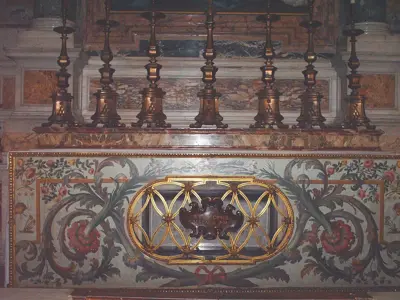
Pope Gregory I, commonly known as Saint Gregory the Great, was the bishop of Rome from 3 September 590 to his death. He is known for instigating the first recorded large-scale mission from Rome, the Gregorian Mission, to convert the then-pagan Anglo-Saxons in England to Christianity. Gregory is also well known for his writings, which were more prolific than those of any of his predecessors as pope. The epithet Saint Gregory the Dialogist has been attached to him in Eastern Christianity because of his Dialogues. English translations of Eastern texts sometimes list him as Gregory "Dialogos", or the Anglo-Latinate equivalent "Dialogus".
