Teresa of Avila Quotes
I do not fear Satan half so much as I fear those who do fear him.
Teresa of Avila,1515-1582,, Teresa de Jesus, Spanish Philosopher & Roman Catholic Saint, Autobiography, 1565
Sourced by: Eigen's Political and Historical Quotations

Spinoza was one of the most feared intellectuals in human history—feared that is by the established power structures. He is the only known person who was excommunicated by the Catholics, the Jews and the Muslims—all were forbidden to read his works. He was the enemy of authority and advocated personal reason as the guide for men.


Samuel Langhorne Clemens, 1835-1910


When the priest died, 3 handwritten manuscripts were found written and signed by him in which he attacked religion in general and the church and the Bible in particular. His Testament was read by Voltaire and Denis Diderot among others and he was very influential in their development as opponents of organized religion. This quotation has been one of the bases of secular humanism which would then develop after he had died.


Sometimes referred to as Gaspar de Toledo. This quotation Illustrates one of the ways that Churches maintained power over the secular government even though they were supposedly separate. By maintaining control over the secular leaders consciences and sense of morality, the Church could control the secular government. In this particular historical case, there was not even a supposed separation. The Confessor had an ex officio role in the high council. See {629457}.


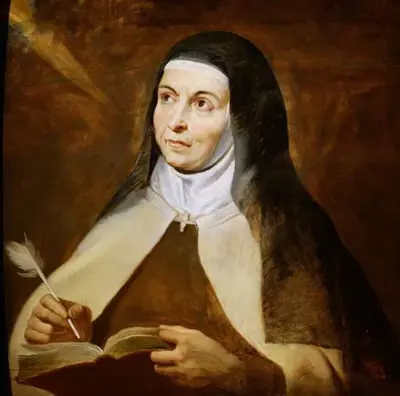
Teresa of Ávila, born Teresa Sánchez de Cepeda y Ahumada, also called Saint Teresa of Jesus, was a Spanish noblewoman who felt called to convent life in the Catholic Church. A Carmelite nun, prominent Spanish mystic, religious reformer, author, theologian of the contemplative life and of mental prayer, she earned the rare distinction of being declared a Doctor of the Church, but not until over four centuries after her death. Active during the Catholic Reformation, she reformed the Carmelite Orders of both women and men. The movement she initiated was later joined by the younger Spanish Carmelite friar and mystic John of the Cross. It led eventually to the establishment of the Discalced Carmelites. A formal papal decree adopting the split from the old order was issued in 1580.
