Thomas Aquinas Quotes
It is a dogma of faith that the demons can produce wind, storms, and rain of fire from heaven.
Thomas Aquinas, ~1225-1274, Catholic Saint & Italian Scholastic Philosopher, Summa Theologica
Sourced by: Eigen's Political and Historical Quotations


Even learned men with some science background believed in witches.


The Bull was directed at French King Louis VII. On Christmas Eve the year before Zengi had broken into the city of Edessa and massacred the French inhabitants. This was the Proclamation of the start of the 2nd Crusade. Note that the Pope, in order to raise troops and money for the Crusades, used the remission of previous sins to motivate Pietro dei Paganelli di Montemagno


Whereas there are a small number of fundamentalist Christians who do not celebrate Halloween and oppose it because it has pagan origins, and they base their decisions on that fact, O’Donnell’s claim of human sacrifice was totally unfounded. There has not been a single case of Halloween human sacrifice ever documented in all the years the holiday has been celebrated by most Americans.


This document was issued in the form of what today would be called a press release or a white paper. Altmark was the Lutheran seat of intellectuality and this document was part of a major Lutheran initiative to propagandize against the rising science of astronomy. The Catholics did the same and both religions saw astronomy as an enemy and evil. See {612384}


In the ensuing few years hundreds of “witches” were burned at the stake and suffered death in other horrible ways.


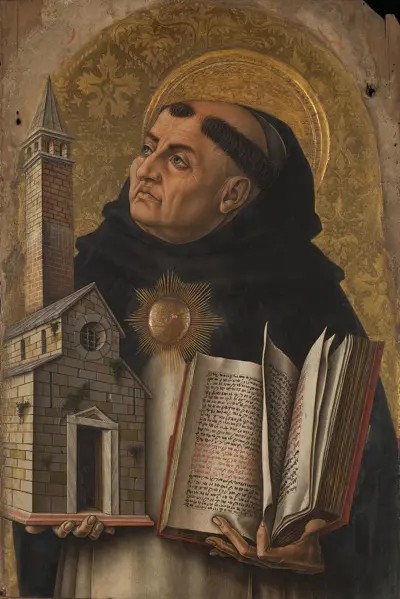
Thomas Aquinas was an Italian Dominican friar, philosopher, Catholic priest, and Doctor of the Church. An immensely influential philosopher, theologian, and jurist in the tradition of scholasticism, he is also known within the latter as the Doctor Angelicus, the Doctor Communis, and the Doctor Universalis. The name Aquinas identifies his ancestral origins in the county of Aquino in present-day Lazio, Italy. Among other things, he was a prominent proponent of natural theology and the father of a school of thought (encompassing both theology and philosophy) known as Thomism. He argued that God is the source of both the light of natural reason and the light of faith. His influence on Western thought is considerable, and much of modern philosophy developed or opposed his ideas, particularly in the areas of ethics, natural law, metaphysics, and political theory.
