GREGORY I
(Pope Gregory I)
Gregory the Great. In the earlier years of the Roman Catholic Church it was more catholic in the sense that is looked to incorporate outside elements wherever they thought there might be benefit. The rigidity of which leaders of the Reformation would later complain had not yet set in.
Gregory the Great. “Emoluments” included the income from all lands and other church property, gifts and tithes, and income of any sort. This formula characterized the division of resources for the better part of Christian history. By today’s standard, the proportion for these Bishops (there were those who chose poverty) and his household seems astoundingly high—his income and sustenance was the equal of all the priests in the bishopric. It illustrates the affluence of the bishops who were major forces in their territories. One of the rationales for such an affluent bishop (the assets were not all personal but he had control of them) was that he should be at least the equal of any in the area including kings and nobles for he was to have as much influence as they. It is difficult today to look at modern bishops and realize how their role, power, relative wealth, and influence has changed. Bishops had their own armies, judiciary, accountants, attorneys and were a government unto themselves.
See {35331} for anohter one of his quotations regarding the use of pictures. Critics claimed that images violated the Lord's Comandment not to worship graven images.
Gregory the Great. The particular offences under discussion were incest which was common among the English people before they had been Christianized. The responsibility for acts “in ignorance of the law” has been debated as long as there has been law. Gregory’s view is remarkably contemporary.
Gregory the Great. The Pope had sent a contingent of monks to bring Christianity to the people of England. However, the monks became immediately discouraged given the primitive state of the inhabitants, the climate, and the dangerous seas to voyage over. They asked permission of the Pope to withdraw. Gregory refused but sent Augustine of Canterbury to lead the contingent.
This was one of the principles of Saxon King Alfred in his distribution of 1/4 of his revenue. Typically. Kings would give lands, monies and tax exemptions to the wealthy nobles to ensure their support and loyalty even though they did not need the benefit, and those that needed, did not get. Opponents of George W. Bush and the early 21st century Republicans used this quotation to criticize the policies that would be large tax cuts and other benefits to the wealthy, while assuming that there would be a “trickle down” effect to the others.
This is an example of one of the reasons he was called “Gregory the Great”. At a time when most church leaders were rigid ideologues, this pope realized that many pagan customs and traditions were embedded in Christian society and it would not successful to try and ban all the pagan customs immediately. So he urged starting where the people were and making gradual changes to finally reach a more Christian celebration pattern. Not only was he successful, but somehow, his strategy was consistent with modern behavior change psychological principles.
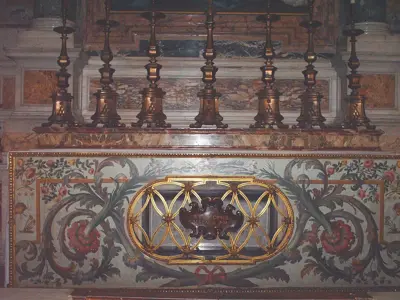
Pope Gregory I, commonly known as Saint Gregory the Great, was the bishop of Rome from 3 September 590 to his death. He is known for instigating the first recorded large-scale mission from Rome, the Gregorian Mission, to convert the then-pagan Anglo-Saxons in England to Christianity. Gregory is also well known for his writings, which were more prolific than those of any of his predecessors as pope. The epithet Saint Gregory the Dialogist has been attached to him in Eastern Christianity because of his Dialogues. English translations of Eastern texts sometimes list him as Gregory "Dialogos", or the Anglo-Latinate equivalent "Dialogus".
