Gregory I Quotes
Images are to be used on church walls so that those who are illiterate can read the Bible.
See {35331} for anohter one of his quotations regarding the use of pictures. Critics claimed that images violated the Lord's Comandment not to worship graven images.
Gregory I, ~540-604, (Gregory the Great), Roman Catholic Pope, Quoted on PBS, August 2, 2006
Sourced by: Eigen's Political and Historical Quotations


With the exception of a few theocracies, the power to set standards of education is claimed by virtually every government in the world. Some national governments have traditionally delegated some or much of the power to state, regional or local governments. The United States has been one of the rare exceptions. The words “education” or “schools” never even appear once in the U. S. Constitution. Therefore, in the U. S. the power belongs with the state governments. (Recently with “No Child Left Behind” the U. S. Federal government has been involved in educational standards setting.) This quotation is used by many as a classic example of a practice of many right wing fundamentalist Christians and Jews who extrapolate from the Bible to determine which legislation God wants or opposes. Most Christian and Jewish clerics and theologians however reject this notion and have a more modern view of the role of God in the democratic political process. Both the United States and Canada have very small minorities who hold the Stockwell Day position. On difference however is that in the United States, such extreme fundamentalists rarely enter or succeed in politics.


Badillo critics observe that the parochial schools have one huge advantage over the public shools. Then can select their students both before admission or after by expelling students. Public schools have very little flexibility and freedom to control their own student bodies.


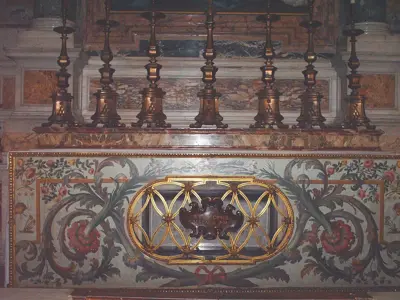
Pope Gregory I, commonly known as Saint Gregory the Great, was the bishop of Rome from 3 September 590 to his death. He is known for instigating the first recorded large-scale mission from Rome, the Gregorian Mission, to convert the then-pagan Anglo-Saxons in England to Christianity. Gregory is also well known for his writings, which were more prolific than those of any of his predecessors as pope. The epithet Saint Gregory the Dialogist has been attached to him in Eastern Christianity because of his Dialogues. English translations of Eastern texts sometimes list him as Gregory "Dialogos", or the Anglo-Latinate equivalent "Dialogus".
