Charlemagne Quotes
Bishops and priests should live according to the canons and should teach others to do likewise
Charlemagne, 742-814, French King Charles, First Christian King & Holy Roman Emperor, Capitulary Issued in the Year 802 [The Church maintained until modern times, that only the church could proscribe and enforce the behavior of Priests and Bishops--not the temporal power, the monarch or other ruler. In this quoted document, Charlemagne, the temporal ruler, had entered into the region that had previously been claimed by the church. Churches and governments have been struggling ever since regarding who could proscribe and enforce behavior upon religious leaders of the community. In modern times, even though the governments had clearly won this prerogative under the law, some religious leaders have tried to maintain their canonical independence often to the detriment of the church. The best examples of this were the Roman Catholic bishops of Ireland, Canada, and the United States, not reporting sexual abuse crimes of priests to the civil authorities (and covering them up), for many years. When the truth became known, the church suffered heavily.
Sourced by: Eigen's Political and Historical Quotations


This was before the state had officially sanctioned and accepted the church. Most of the institutions were pagan and the kings had subjects of both religions with Christianity not yet dominant. Yet among Christians, the Church had government temporal power, even before the church was allied with the state.

The letter had been written earlier, but this and 51 other letters written when she was in Turkey were published in 1763. At the time, Turkey, the seat of the Ottoman Empire, was an Islamic state operating under Islamic law, as were all countries within the Ottoman Empire. Today, Turkey is a secular state and the clergy and the legal profession are separate.


Spinoza’s ideas were considered so radical and dangerous that he was the only man in history who was excommunicated by the Catholics, the Jews and the Muslims. This quotation, in the 17th century outraged almost every cleric. This is one of the strongest and unequivocal statements about the desirability of separation of church and state. Interestingly, as early as this statement was, Spinoza believed that harm extended to both religion and government.

For those who doubt that there was intended a rigid separation between church and state, they have but to contemplate this passage. However, at about the same time, the State of South Carolina moved in its constitution in an opposite direction. See {612573}. When the framers of the Constitution met in 1787 in Philadelphia the separation of church and state issue was not really resolved and awaited the Bill of Rights where the separatists won out.


This was a fairly radical constraint on what had been a traditional priestly prerogative throughout the ages. However, the penalty for such a sin and infraction was rather modest—a warning for the first offence, followed by reducing the cleric’s income. There were more serious punishments proscribed for repeated offenses, but typical of most reform efforts a newly prohibited activity carries a very light penalty. For example $20 fines for providing alcohol to a minor was the initial penalty in some states. A then current comparison can be made since elsewhere in this council dueling between Christians was also prohibited. But the penalty for even the first offence was excommunication.

William the Conqueror. This is one of the earliest government action separating some church functions from state functions.

This quotation illustrates how the power and mechanism of an established church operated to control ideas and maintain theological monopoly. In this case, no one could sell or rent any facility in the city to a cleric or church of any kind or persuasion without first having the approval of the Bishop who had theological control of that territory. Even Catholic scholars could not rent a room in the city unless their scholarship met with the Bishop’s approval. This was history with which the American Founding were very familiar, and wanted to avoid by adopting the 1st Amendment.


The Roman Catholic Clergy as well as the Vatican was quite corrupt in Luther’s time which was one of the reasons for his reform effort. Throughout history some clerics have abused their positions and roles and acted as impediments to the faith in their own religions.

The clergy of the colonies were split on the American Revolution, but those clergy who supported the revolution made a huge contribution to the individual American’s intellectual view of the legitimacy of Parliament’s making laws governing the American Colonies. The anti-British clerics called for action while other forces of colonial America urged caution.

The Christian Roman Empire was split in two—a Western (Latin) Empire led by the Roman Catholic Church in Rome, and the Eastern (Greek) Roman Empire led by the Orthodox Church headquartered in Constantinople (Byzantium). The two churches were not only in a theological conflict but violence broke out and the armies of the two religious empires attacked each other now and then. In 1439, leaders of the two versions of Christianity met in Florence, and they agreed to reunuion in which the Eastern Orthodox would again acknowledge the authority of the Pope. This was not a popular agreement with the majority of the Eastern Orthodox people and some of the clerical leadership. Constantine, realizing that he did not have pubic support at home for the end to the schism and the acceptance of the authority of the Pope, kept stalling on officially announcing and implementing the unity treaty. The Pope’s patience was wearing thin. Constantine did not adhere to ther treaty and the two churches have been apart ever since.

King Henry VIII had left the Roman Catholic church and taken England and Ireland out also. He replaced the Pope as the head of the English and Irish churches. There was much opposition in Ireland and the priests were the most assertive opponents to the change and were still loyal to the Pope. Queen Elizabeth continued to have problems with the Priests. James I, Elizabeth’s successor, became fed up by the Roman Catholic Priests and therefor issued this Proclamation.


While he did not believe that clerics should engage in politics, he did believe that Islamic values and law should be embodied in the nation’s constitution and laws.
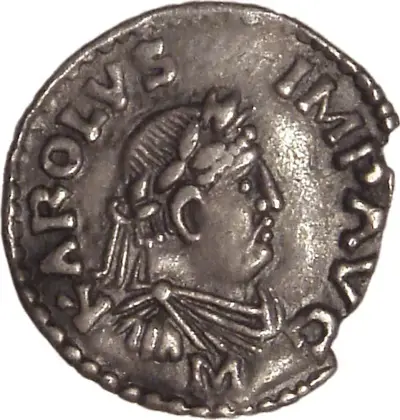
Charlemagne (English: /ˈʃɑːrləmeɪn, ˌʃɑːrləˈmeɪn/; French: [ʃaʁləmaɲ]) or Charles the Great; from the Latin Carolus Magnus, numbered Charles I, was the King of the Franks from 768, the King of the Lombards from 774, and the Emperor of the Romans from 800. During the Early Middle Ages, he united the majority of western and central Europe. He was the first recognised emperor to rule from western Europe since the fall of the Western Roman Empire around three centuries earlier. The expanded Frankish state that Charlemagne founded is called the Carolingian Empire. He was later canonised by Antipope Paschal III.
