Joseph Stalin Quotes
Why will our elections be equal? Because neither differences in regard to property (differences partly existing) nor differences of race and nationality will cause any privileges or disadvantages. Women will enjoy the right to elect and be elected equally with men. Our elections will be really equal.
Stalin, Joseph. The Stalin-Howard Interview. International Publishers, 1936.


The rights possessed by the Arab minority of Israel exceeds not only those of Jews in any Arab nation, and exceeds those of any minority in an Arab state. And because Israel is the only democracy in the Middle East, the Arabs of Israel possess more political rights than do Arabs anywhere else in the Middle East. The number of Arab political parties in Israel is larger than that of most Arab nations where opposition parties are rarely permitted.


Hunt gave as an example Mary Smith of Stanmore. This quotation is very interesting in the history of women’s suffrage. Hunt was a strong advocate for Universal Suffrage (See {616653}.) At the time, even men had to be a taxpayer and own a sufficient amount of property to vote. Less than 20% of the population of Britain were allowed to vote. The argument at the time was that the husband would represent the family’s interest at the ballot box and there was no need for women to vote. But by facing parliament with the logical inconsistency of its position, he was able to make his point, although there were very few women like Mary Smith who were single and had the economic resources to qualify. Most widows remarried so even if they had economic resources, there was a man who could assume the then perceived role of head of the household.


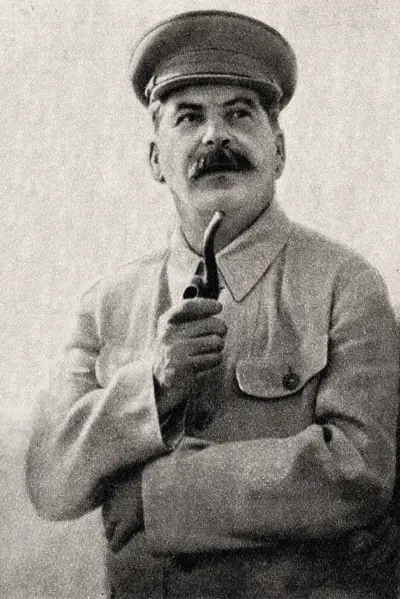
Joseph Vissarionovich Stalin was a Georgian revolutionary and the ruler of the Soviet Union from 1927 until 1953. He served as both General Secretary of the Communist Party of the Soviet Union (1922–1952) and Chairman of the Council of Ministers of the Soviet Union (1941–1953). Despite initially governing the country as part of a collective leadership, he ultimately consolidated power to become the Soviet Union's de facto dictator by the 1930s. A communist ideologically committed to the Leninist interpretation of Marxism, Stalin formalized these ideas as Marxism–Leninism while his own policies are known as Stalinism.
