William Cobbett Quotes
When your blood runs down the gutters, don't say you were not forewarned of the danger.
In early America, the political parties had their own newspapers where “truth” was not an important journalistic virtue. Red scares and other fears of foreign conspiracies are as old as our nation. In 1798 the Federalists accused Vice President Thomas Jefferson, among others, of being in contact with the foreign conspirators and printed details of a "manufactured" plot to massacre the citizens of Philadelphia in one of their controlled newspapers. The nation was so alarmed that the infamous Alien and Sedition Acts were passed by Congress a few months later. These were probably the greatest infringements on American civil liberties in our history.
William Corbett, 1762-1835, Federalist Newspaper Editor, Porcupine's Gazette, May 9, 1798
Sourced by: Eigen's Political and Historical Quotations


The first Jew to run for the Vice Presidency on a major party ticket.

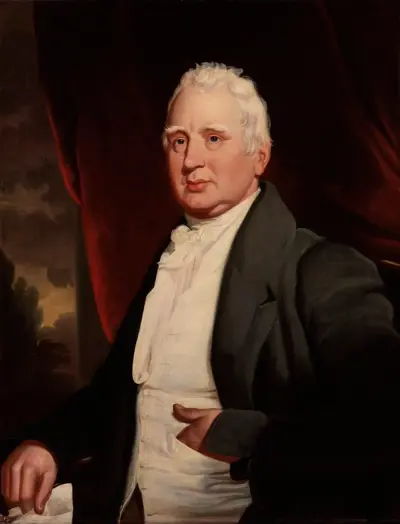
William Cobbett was an English pamphleteer, journalist, Member of Parliament and farmer born in Farnham, Surrey, one of a popular agrarian faction seeking to reform Parliament, abolish "rotten boroughs", restrain wanton foreign activity and increase wages, to promote domestic peace and ease poverty among farm labourers and smallholders. He backed lower taxes, saving, reversing enclosures of commons and resisting the gold standard of 1821. He sought an end to borough-mongers, sinecurists and "tax-eaters" (overpaid and corrupt bureaucrats, public servants and stockbrokers), and dismissed British Jews in a typecast by the same token. Early in life he was a soldier and devotee of king and country, but later pushed for a radicalism that helped to produce the Reform Act 1832 and gain him one of two seats in Parliament for the newly enfranchised borough of Oldham. He urged Catholic emancipation. He saw British agriculture and other economic output geographically. His polemics cover subjects from political reform to religion. His best known book is Rural Rides (1830, still in print). He argued against Malthusianism that economic betterment could support global population growth.
