Hastings Kamuzu Banda Quotes
Dissenters will become food for crocodiles.
Hastings Kamuzu Banda, 1898–1997, 1898–1997, President for Life, Malawi, Speech, 1992
Sourced by: Eigen's Political and Historical Quotations


In early America, the political parties had their own newspapers where “truth” was not an important journalistic virtue. Red scares and other fears of foreign conspiracies are as old as our nation. In 1798 the Federalists accused Vice President Thomas Jefferson, among others, of being in contact with the foreign conspirators and printed details of a "manufactured" plot to massacre the citizens of Philadelphia in one of their controlled newspapers. The nation was so alarmed that the infamous Alien and Sedition Acts were passed by Congress a few months later. These were probably the greatest infringements on American civil liberties in our history.


Islam had been the center of intellectual thought in the world, until the clerics had decided that innovation itself was a sin and one that called for the death penalty. Although most non-Muslim religions went through stages of death for religious dissent. However, the Koran deals with every part of society. There is no separation of church and state. All knowledge is in the Koran the fundamentalist believes and anyone who expresses a new idea is not only wrong and a heretic, but is dangerous and must be executed. It is therefore not very surprising that the Islamic contributions to science, medicine, and the arts has been so small. The Islamic fundamentalists are opposed by Muslim modernists who try to change the Islamic culture but they are on the minority. Most religions have gone through bad earlier periods where dissent was heresy and warranted death. Fundamentalist Islam is the only one which bans original thought of any kinds even it does not contradict established doctrine.

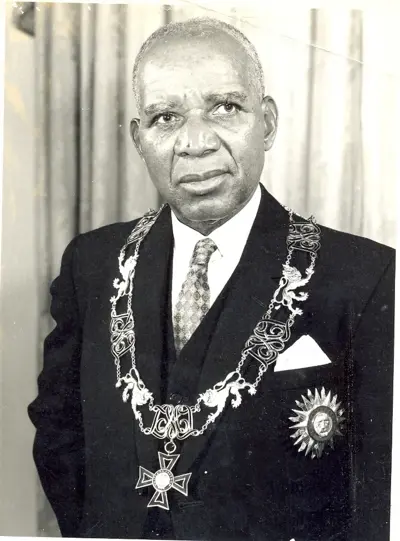
Hastings Kamuzu Banda was the Prime Minister and later President of Malawi from 1964 to 1994 (for the first year of his rule as it achieved independence in 1964, Malawi was the British protectorate of Nyasaland). In 1966, the country became a republic and he became president. His rule has been characterized as a "highly repressive autocracy."
