Andrew Sullivan Quotes
When [George W.] Bush says that Abu Ghraib was the work of a few, he forgot to mention that he was one of them.
Abu Ghraib was the major prison in Iraq during the Iraq War. American military committed many crimes on prisoners ranging from murder to sexual humiliation. The actual perpetrators claimed that the higher ranks of officers knew what was ongoing and provided the policies, rules and culture of the prison. The president and the Vice President many thought were the officers responsible and violated the Uniform Code of Military Justice. Their administration had issued a legal memorandum that for the first time in American history would allow some kinds of torture of prisoners in the War on Terror. A few enlisted personnel were punished and a general was transferred but no senior military or civilian personnel were held responsible or punished.
Andrew Sullivan, Editor of The New Republic & Political Commentator, “We Do Not Torture,” The Daily Dish, September 18, 2008
Sourced by: Eigen's Political and Historical Quotations

Khanenei failed to make three important distinctions. First, the crimes committed by American forces in Abu Ghraib and Guantanamo were NOT the policy of the American government whereas all of Hitler’s crimes were not only government policy but Hitler had laws passed to enable these atrocities. Bush and the American Military command may have not been competent enough to prevent the problems, and may have been too lenient to punish the guilty, but they never intended them to occur. Second is scale. Abu Ghraib and Guantanamo illegalities led at most to the deaths of one or two people. Hitler killed over 6 million in his prisons. Third, as soon as Bush found out about the problems, they were stopped whereas Hitler continued until militarily removed from power and neutralized.

This quotation is a good example of how tolerant some nations can be in terms of maintaining diplomatic relations and trade relations with other countries. The American and English governments chose to simply protest and condemn the slanderous statement but decided that the Prime Minister was pandering to his political local Islamic base, so took no further action and kept open diplomatic relations. Mahathir had a history of being very accusatory of the West with respect to anything that affected the Arab Muslims. The number of Muslims killed by the Americans and British in the Iraq War was very small compared to the huge number of Muslims killed by other Muslims in their Sunni Shiite civil war. While Bush and Blair both generated support for the Iraq invasion by making claims of WMD development in Iraq that were false, it is not clear whether or not they knew their statements were false, should have known that they were false, created an atmosphere against Iraq that was likely to produce false accusations, or were simple misled by poor intelligence. Mahathir, of course, chose to assume the worst case, and claim it was true, which is what many people think Bush and Blair did in analyzing the intelligence on Iraq.


Abu Ghraib was the prison in Iraq where prisoners were brutalized and treated illegally and immorally. Seymour Hirsh was the Pulitzer Prize-winning investigative journalist who broke the story. Levy contrasted that where the Algerian War was full of such atrocities but French intellectuals and press would not publicize it. It didn’t stop for the whole war.

President George W. Bush, to justify the invasion of Iraq had told the public that the Iraqi regime was developing nuclear weapons and other weapons of mass destruction, and had participated in the September 11 attack on the United States by assisting Al Qaeda. It turned out that these statements were false. The administration claimed that their error was well intentioned and the result of faulty intelligence. Opponents claimed that the administration officials knew that they were exaggerating and had pressured the intelligence agencies to create intelligence conclusions that supported their story.


Turkey, under the control of the triumvirate of the 3 Young Turks had massacred almost all of the Armenian population in the area claimed by Turkey. At the end of WWI, there were many demands that those who ordered the policy of a Turkish genocide and those who carried it out by brought to justice—tried and punished. The Sultan had done little if anything to stop the slaughters although he was very weak, Turkey under the Young Turks had also picked the wrong side and allied with the Germans. The Sultan and his Grand Vizier were trying to pick up the pieces and maintain the Ottoman Empire as best they could despite they the fact that they lost control of much of their vast territory. At the Paris Peace Conference, the Grand Vizier virtually admitted the crimes and committed the Turkish government to determining the guilty and bringing them to justice. He actually had 50 of the worst offenders arrested (See {620595}.). However, there were a few tried and one governor of a province was hanged and a few others received short jail sentences. Talaat, the worst of The Young Turks regarding the genocide, escaped to Germany. But he was tracked by a surviving Armenian who assassinated Talaat. The assassin was acquitted by a sympathetic German court which ruled that the extermination of the assassin’s family had been so traumatic that temporary insanity relieved the assassin of criminal responsibility.

See {618460} for the kinds of statements that stimulated this type of political attack.

President George W. Bush, to justify the invasion of Iraq had told the public that the Iraqi regime was developing nuclear weapons and other weapons of mass destruction, and had participated in the September 11 attack on the United States by assisting Al Qaeda. It turned out that these statements were false. The administration claimed that their error was well intentioned and the result of faulty intelligence. Opponents claimed that the administration officials knew that they were exaggerating and had pressured the intelligence agencies to create intelligence conclusions that supported their story.


Germany had invaded and occupied much of Europe. These two fronts accounted for the majority of the German casualties. The Germans not only violated the Geneva Convention and the Laws of War repeatedly, but as you can see from this quotation, it was deliberate policy. Keitel was tried and hanged after the war. See {621438} .


Abu Gharib was a prison in Iraq in which the officers in charge and the command structure failed to prevent a number of American soldiers from abusing and sexually and religiously humiliating Muslim prisoners. Photographs of the abuses traveled around the world and that particular unusual incident unfortunately fit the propaganda preconception of the Americans promoted by Islamic fundamentalist extremists. Tragically, as General McChrystal observed, Abu Gharib served as a recruiting tool for the terrorists.


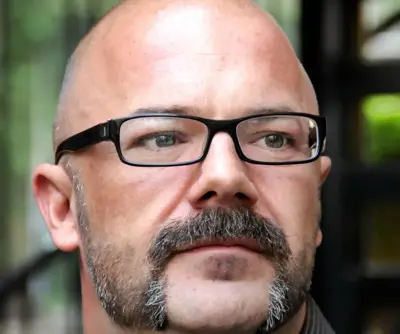
Andrew Michael Sullivan is a British-American author, editor, and blogger. Sullivan is a political commentator, a former editor of The New Republic, and the author or editor of six books. He started a political blog, The Daily Dish, in 2000, and eventually moved his blog to platforms, including Time, The Atlantic, The Daily Beast, and finally an independent subscription-based format. He announced his retirement from blogging in 2015. From 2016 to 2020, Sullivan was a writer-at-large at New York. His newsletter The Weekly Dish was launched in July 2020.
