Hugo Black Quotes
We repeat and again reaffirm that neither a State nor the Federal Government can constitutionally force a person "to profess a belief or disbelief in any religion." Neither can constitutionally pass laws or impose requirements which aid all religions as against nonbelievers, and neither can aid those religions based on a belief in the existence of God as against those religions founded on different beliefs.
Black, Hugo. Torcaso v. Watkins, 367 U.S. 488. Supreme Court of the United States, 1961, p. 495.


Kennedy was being hurt be fears that as a Catholic, he would be beholden to the Pope and the Catholic Bishops. There were many protestants who believed that the Catholic Church was antithetical to democracy and some who even believed that Catholicism was the religion of Satan. Kennedy decided to confront the issue head on.


Opponents of the strict separation of church and state use this quotation to support their view. However, Story herein describes public sentiment, not what was passed and ratified in the Constitution and Bill of Rights. See {614309} and {614310} for his statements from the same work that show that there was no question in his mind but that church and state are separated by the Constitution and the First Amendment.


Religious organizations may become grantees or contractors to perform various social services—along with other non-profit organizations provided, that they do not comingle the government contract money with the general church funds, that the services that are provided are provided to all regardless of religious beliefs, and that there is no religious ceremony or indoctrination in the provision of services. Catholic Charities and the Salvation Army are two of the larger religious organizations that receive government funds for general service provision. Those religions who do not want Federal Auditors reviewing their use of the money or who insist that prayer is a necessary aspect of the social services are the ones who have trouble and accuse the government of being hostile to religious social services.


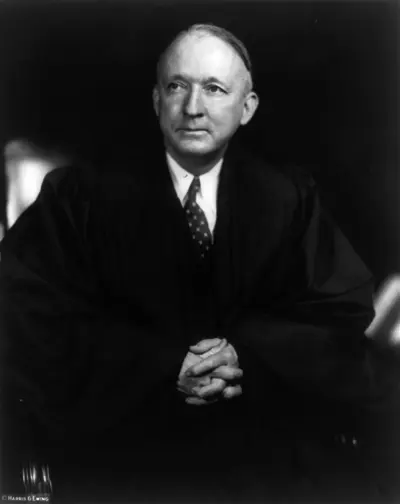
Hugo Lafayette Black was an American lawyer, politician, and jurist who served as a U.S. Senator from 1927 to 1937 and as an Associate Justice of the Supreme Court of the United States from 1937 to 1971. A member of the Democratic Party and a devoted New Dealer, Black endorsed Franklin D. Roosevelt in both the 1932 and 1936 presidential elections. Having gained a reputation in the Senate as a reformer, Black was nominated to the Supreme Court by President Roosevelt and confirmed by the Senate by a vote of 63 to 16 (six Democratic Senators and 10 Republican Senators voted against him). He was the first of nine Roosevelt appointees to the Court, and he outlasted all except for William O. Douglas.
