Hugo Black Quotes
The “establishment of religion” clause of the 1st Amendment means at least this: Neither a state nor the Federal Government can set up a church. Neither can pass laws which aid one religion, aid all religions, or prefer one religion over another. Neither can force nor influence a person to go to or to remain away from church against his will or force him to profess a belief or disbelief in any religion. No person can be punished for entertaining or professing religious beliefs or disbeliefs, for church attendance or non-attendance. No tax in any amount, large or small, can be levied to support any religious activities or institutions, whatever they may be called, or whatever form they may adopt to teach or practice religion. Neither a state nor the Federal Government can, openly or secretly, participate in the affairs of any religious organizations or groups and vice versa.
Hugo Black, 1886-1971, U. S. Senator (Democrat, AL), U. S. Supreme Court Justice, Everson v. Board of Education, 1947
Sourced by: Eigen's Political and Historical Quotations


This quotation is one of the first to make the critical observation that the only time that tolerance of a religion is necessary is when there is an established church and others that deviate from it. If there is no established church, as the Founding Fathers envisioned, there is no preeminent church to do the tolerating. All are equal. In practice, Protestant churches were proportionately dominant in early America and up through the 20th century. So most of the issue of tolerance problems in America were cultural. And there is still a minority of Christians who believe that America should be a Christian country and other religions should be “tolerated.” However, Clinton and most of the founders did not want to see even general Christianity established as the national religion even they it was the majority religion.


This is a critical quotation on the government establishment of religion issue. There are a few people who have argued over the years that the Founding Fathers and their culture was religious and where they were careful to avoid favoring one religion over another, they did NOT intend to put atheism on the same equal plane as religion as far as government action is concerned. However, some of the Founding Fathers were atheists, and some others like John Adams were deists—they believed in a God but not in the Trinity or in Judaism or any organized religion. So this quotation makes it clear that the First Amendment does NOT favor religion over non religion or secularism. Atheism must be on an equal footing but not on a higher plane.


This quotation is extremely important because it was completely antithetical to the United States basic philosophy of freedom of religion. Anti-Catholic prejudice which already existed, seized on this quotation to demonstrate that the Catholic Church was a danger to Protestantism and the other religions that had come to America and the many that were created in America. It would take 70 years for the anti-Catholic prejudice had diminished sufficiently to elect a Catholic President—JFK.


Opponents of the strict separation of church and state use this quotation to support their view. However, Story herein describes public sentiment, not what was passed and ratified in the Constitution and Bill of Rights. See {614309} and {614310} for his statements from the same work that show that there was no question in his mind but that church and state are separated by the Constitution and the First Amendment.


Kennedy was being hurt be fears that as a Catholic, he would be beholden to the Pope and the Catholic Bishops. There were many protestants who believed that the Catholic Church was antithetical to democracy and some who even believed that Catholicism was the religion of Satan. Kennedy decided to confront the issue head on.


The Senate was presented with James Madison’s Language for the First Amendment. These three alternatives were proposed and rejected. The rejected versions turn out to have been very important. Some have argued that the First Amendment does not prohibit Congress making laws regarding religion as long as it doesn’t favor one religion over another—for example pay for clerics of all religions. However, that was the third proposal and it was rejected in favor of the high wall of separation proposed by Madison.

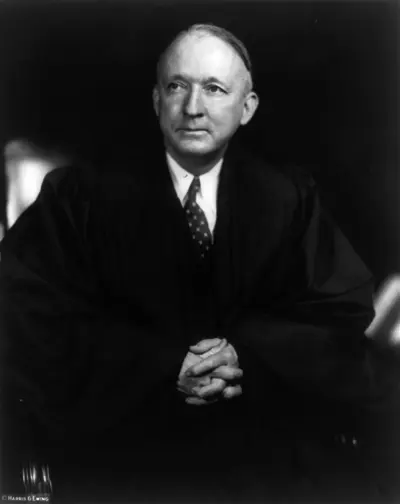
Hugo Lafayette Black was an American lawyer, politician, and jurist who served as a U.S. Senator from 1927 to 1937 and as an Associate Justice of the Supreme Court of the United States from 1937 to 1971. A member of the Democratic Party and a devoted New Dealer, Black endorsed Franklin D. Roosevelt in both the 1932 and 1936 presidential elections. Having gained a reputation in the Senate as a reformer, Black was nominated to the Supreme Court by President Roosevelt and confirmed by the Senate by a vote of 63 to 16 (six Democratic Senators and 10 Republican Senators voted against him). He was the first of nine Roosevelt appointees to the Court, and he outlasted all except for William O. Douglas.
