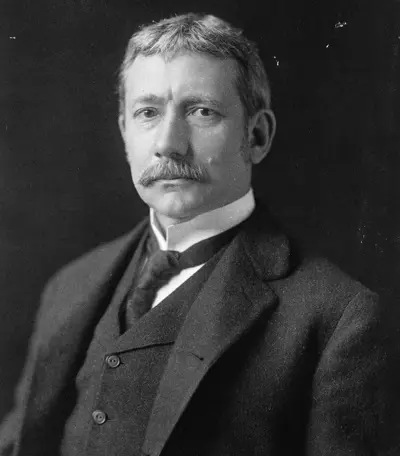
Elihu Root Quotes
We have a nation with great wealth, willing to spend its money freely for the procurement of arms and munitions of war and supplies of all kinds. Nevertheless, no one can fail to see that there has been in the past, in the administration of the army, something which was out of joint. It is not necessary for me to go into the specification of details; for every one of us knows that whenever an exigency has come, confusion has come
Root was serving as Secretary of War at the time. The army of the United States was in sad shape. Congress did not want to appropriate much money for the military as there was no one to fight any longer. Indians had been subdued, relations with Canada were excellent. Mexico was too weak to be a threat, and the Pacific and Atlantic Oceans protected against invasion by large forces. The navy was in much better shape and could protect against invasion from abroad anyway. The Republicans then were in control of government and were generally very isolationist. And there was the traditional American animus to a standing Army. See {601390} and {592824} for examples of that attitude. The army itself was a set of individual fiefdoms with nepotism and cronyism rampant with no general staff to have the big picture. Theodore Roosevelt and Root, unlike most other Republicans, wanted to reform and build up the army as well as strengthen the navy,
Elihu Root, 1845-1937, U. S. Secretary of War & U. S. Secretary of State, U. S. Senator (Republican, NY), Nobel Laureate in Peace, Statement Before The House Committee On Military Affairs, Washington, December 13, 1902
Sourced by: Eigen's Political and Historical Quotations
A state militia is necessary
What is interesting about this quote is that it is very much like many American politicians who support a large and strong military.
The US Military was not always strong and at many points in U. S. history Americans did not want a large military feeling that the oceans protected America from invasion and that we should not be involved in wars in the rest of the world. This isolationist sentiment has been existent in America ever since the founding but has gotten stronger and weaker at different periods.
Roosevelt was then the Assistant Navy Secretary. However, the Secretary was on vacation and Roosevelt as Acting Secretary anticipated the Spanish American War. TR had also ordered large amounts of supplies and ammunition and when the President and Congress were faced with the possibility of war with Spain, the Navy was fully ready for war enabling the Declaration.
He lost the vote on this issue, and the Congress created the first committee to investigate and oversee military affairs.
He won the debate and the Congress created the first committee to investigate and oversee military affairs.
Even in democratic America, this has been true. We spend almost any amount of money to give our military the weapons of war that will make them more effective soldiers, but when they return with mental and physical wounds, government money is not so easy to come by to preserve them in good health. Cost is a major consideration in Veterans benefits and care, but weapons expenditures have little restraint. It has been so for many years in many cultures.
This is a very important quotation because it and {641523} show the great difficulty that Washington was under and the fact that he repeatedly asked Congress for assistance very little of which was provided.
This is a very important quotation because it and {641522} show the great difficulty that Washington was under and the fact that he repeatedly asked Congress for assistance very little of which was provided. Washington began to be disillusioned about the militias at this time; see {641525} for the conclusions he reached about the state militias.
He was exactly right. See {642079} for a perfect example of this prediction.
Congress and most of the Founding Fathers were very distrustful of standing armies. They were aware that standing armies had taken over societies ever since ancient Rome and Julius Caesar.
- Born: February 15, 1845
- Died: February 7, 1937
- Nationality: American
- Profession: Lawyer
Elihu Root was an American lawyer and statesman who served as Secretary of State under President Theodore Roosevelt and as Secretary of War under Roosevelt and President William McKinley. He moved frequently between high-level appointed government positions in Washington, D.C. and private-sector legal practice in New York City. For that reason, he is sometimes considered to be the prototype of the 20th century political "wise man", advising presidents on a range of foreign and domestic issues. He was elected by the state legislature as a U.S. Senator from New York and served one term, 1909–1915. Root was awarded the Nobel Peace Prize in 1912.