John Lewis Quotes
We had teachers, we had high school principals, we had people teaching in colleges and university in Tuskegee, Alabama. But they were told they failed the so-called literacy test.
Lewis, John. "Testimony Before the Senate Judiciary Committee on the Voting Rights Act." U.S. Senate, 2006.


There are few people today who could believe that a United States senator would castigate the head of a Federal Agency for spreading “racial equality propaganda.” But at the time—1943—the actions of Education Commissioner John W. Studebaker and his Assistant took remarkable courage.

Preclearance was a requirement that any change in the voting or registration laws, rules or procedures needed to be approved by the Federal Justice Department. He was testifying about why preclearance was important and why it was placed in the Voting Rights Act every time it was reauthorized. See {635271} for what happens without preclearance.

This quote illustrates the Southern segregationist view in the Jim Crow South.


Mississippi has always had one of the poorer education systems of the nation. But in the early 20th Century, it was far, far behind other states. It was terrible for whites and abysmal and almost non-existent for Blacks. The Federal Government began some limited aid to education and many segregationists of the South feared that if the money were spent to improve Negro education as well as white education, the Southern, segregationist way of life was threatened. Vardaman was absolutely right to worry for what he and the other racists of the South feared most actually came to pass. See {584325} for another segregationists fear of educating African Americans.


Vardaman, on of America’s worst racists, was one of the main drafters of that constitution. This is an example of why the Voting Rights Act was later needed to unravel a endemic system of keeping African Americans from voting or having any part in politics.

The President was asking for passage of his Voting Rights Bill.
In the early 20th century, Carver and Du Bois were the two most important Negro leaders in America. However, they disagreed over tactics. Carver tended to believe that if the Negro would be educated and trained for meaningful occupations, he would rise in the eyes of the whites and discrimination would diminish. Du Bois was more cynical as can be seen in this quotation as he looked back on history when he was 95 and close to death. He had the advantage at this time of seeing that Washington’s strategy had failed, but he opposed Washington on this from the beginning. Most whites preferred Washington’s view as whites were relived of immediate moral responsibility for racism and the burden was placed on Blacks to train, develop and display themselves as worthy. It was only when very large numbers of Blacks had done this and nothing much changed in terms of civil and economic rights, that it was clear that Washington’ view had been hopelessly naïve.


Surprisingly to most of us, Indians and Blacks could vote in Virginia before 1723. They could even hold public office until 1705 when Virginia passed a law banning that. See Quotation 643587. 18 years later the Virginia legislature also outlawed these minorities from voting as this quotation demonstrates.

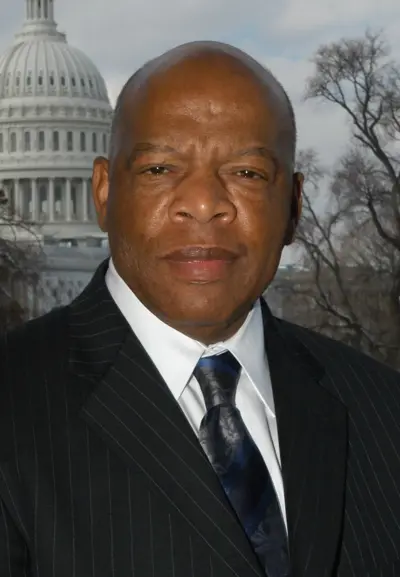
John Robert Lewis was an American politician, statesman, and civil rights activist and leader who served in the United States House of Representatives for Georgia's 5th congressional district from 1987 until his death in 2020. He was the chairman of the Student Nonviolent Coordinating Committee (SNCC) from 1963 to 1966.
