Virginia Quotes
No free Negro, mulatto, or Indian, whatsoever, shall hereafter have any vote at the election of burgesses, or any other election whatsoever
Surprisingly to most of us, Indians and Blacks could vote in Virginia before 1723. They could even hold public office until 1705 when Virginia passed a law banning that. See Quotation 643587. 18 years later the Virginia legislature also outlawed these minorities from voting as this quotation demonstrates.
Virginia Law, 1723
Sourced by: Eigen's Political and Historical Quotations

Interestingly, before 1705, there was no legislative prohibition against Indians and Free Negroes being full citizens including holding public office and voting. This act prohibited them from holding public office, but did not prohibit them from Voting provided they met the general voting requirement of being a landholder. However, 18 years later, voting by these minorities was no longer allowed. See Quotation 643588.


Preclearance was a requirement that any change in the voting or registration laws, rules or procedures needed to be approved by the Federal Justice Department. He was testifying about why preclearance was important and why it was placed in the Voting Rights Act every time it was reauthorized. See {635271} for what happens without preclearance.

Booth was the younger son of a very prominent Northern family of actors. His older brother was considered the greatest American actor, and the rest of the family were abolitionists and vehement Union supporters. They found young John’s views reprehensible.


Vardaman, on of America’s worst racists, was one of the main drafters of that constitution. This is an example of why the Voting Rights Act was later needed to unravel a endemic system of keeping African Americans from voting or having any part in politics.

She was one of the first prominent white southerners to denounce racial segregation.


Brigham Young, the Mormon Leader and Territorial Governor, was strongly opposed to Interracial sex. See {629150}. An earlier clause provided for loss of the rights to a slave if the master had sexual relations with the slave, something that no Southern State had ever done.

At that time a number of state legislatures all changed their state voting laws to require citizens who try to register to vote to have documentation of various kinds and or obtain special documentation. These were generally possessed by upper class and educated people but not in as large proportions by lower and working class people. To obtain the documents and register if things like original birth certificates were not possessed, the citizen had to lose much of a day’s work and travel some distance. The burden existed on most lower class people and especially the minorities. The courts nullified some of these discriminatory requirements for voter registration, but many were allowed. The rationale was to prevent voter fraud and yet there were almost no cases of voter fraud in the entire country. While the requirements were racially discriminatory, they were also socioeconomically discriminatory. By coincidence, or perhaps not, every state that added these requirements had a Republican controlled state legislature AND a Republican Governor. Despite the effort to suppress Obama and Democratic voters, the effort backfired. Minorities and especially Blacks were so outraged that Jim Crow voting suppression had returned that they made a huge effort to register and get out the vote and Blacks voted in a much larger proportion than historical and well over 90 percent voted for Obama who won the election handily.

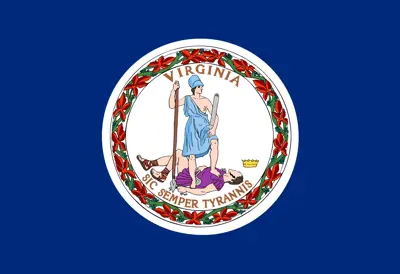
Virginia (/vərˈdʒɪniə/ (listen)), officially the Commonwealth of Virginia, is a state in the Mid-Atlantic and Southeastern regions of the United States, between the Atlantic Coast and the Appalachian Mountains. The geography and climate of the Commonwealth are shaped by the Blue Ridge Mountains and the Chesapeake Bay, which provide habitat for much of its flora and fauna. The capital of the Commonwealth is Richmond; Virginia Beach is the most-populous city, and Fairfax County is the most-populous political subdivision. The Commonwealth's estimated population as of 2019 is over 8.54 million, with 36% of them living in the Baltimore–Washington metropolitan area.
