Augustus Quotes
To seek to keep the established constitution unchanged argues a good citizen and a good man.
Macrobius. Saturnalia. Translated by Robert A. Kaster, vol. 1, Harvard University Press, 2011, p. 331.


There was much anti-war sentiment in 1812. Reacting to anti-war literature in Boston bookstores:


Fiji had been divided ethnically between the indigenous tribes and Indian immigrants. The latter were pushing for modern democracy and the latter wanted it tempered by traditional authority of tribal leaders and traditional values.


She was in deep trouble for her writings. She had earlier tried to stave off a revolution by getting the King, the nobility, the clergy and the politicians to compromise, and she predicted the sad outcome if they did not. During the Reign of Terror she spoke out against the vengeance killing that was so prevalent and alienated herself to many of the fanatics. She realized that she could be arrested any day. Yet she wrote this document which the extremists found even more incriminating. She was arrested a few weeks later, tried and executed. As she predicted, France and the historical scholarly world remembered her accurate predictions and warnings, and her “civic virtue”. Check out her other quotations in this collection.


“Societies” were volunteer community associations formed for the purpose of monitoring the public officials and legislatures and recommending things. They would invite speakers and exchange political knowledge. They performed many of the functions that think tanks and local political parties do in modern times, but generally they were totally non-partisan—hence they were “disinterested”.
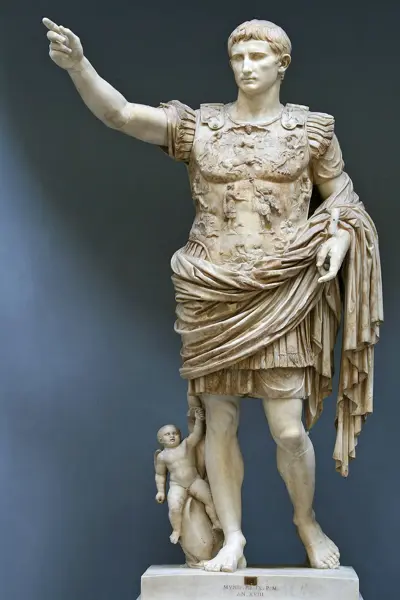
Caesar Augustus was the first Roman emperor, reigning from 27 BC until his death in AD 14. His status as the founder of the Roman Principate (the first phase of the Roman Empire) has consolidated an enduring legacy as one of the most effective and controversial leaders in human history. The reign of Augustus initiated an era of relative peace known as the Pax Romana. The Roman world was largely free from large-scale conflict for more than two centuries, despite continuous wars of imperial expansion on the Empire's frontiers and the year-long civil war known as the "Year of the Four Emperors" over the imperial succession.
