Washington Irving Quotes
They who drink beer will think beer.
Washington Irving, 1783-1859, Author and U.S. Diplomatic Attache to Spain, The Sketch Book of Geoffrey Crayon, 1820
Sourced by: Eigen's Political and Historical Quotations


Sunday was a leading prohibitionist.


6th Baron Byron

When Washington was younger and running for the colonial Virginia assembly, he bought beer and rum for all the voters in his precinct. He did not then realize the damage that alcohol can do. One of the commonalities between Lincoln and Washington were their experience in seeing alcohol cause the death and/or ruination of many. See {630832}.

The graphic for this quote is the original illustration from the article. German WWII propaganda characterized Churchill as a hugly overweight, ugly, drunk. Churchill was a relatively heavy drinker of alcohol.


One of the commonalities between Lincoln and Washington were there experience in seeing alcohol cause the death and/or ruination of many. See {630833}.

Alcoholism is a disease that has affected people of every occupation, every socioeconomic class, every color and nationality, and we all have seen instances so often that most people realize that anyone might be addicted to alcohol. The result is any accusation that someone is an alcoholic is plausible to most of us. As a result of this, it has become a favorite untrue slander in political attacks. Even when false it is believable as in the earlier decades of America, drinking heavily was a part of political culture and many would become addicted.


There was no Federal regulation of food and drink then. Fast buck whisky purveyors would include all kinds of ingredients and processes, safe and sanitary or not. Many Americans died or became very sick from eating tainted food then. Even bad whisky had killed many. TR chose whisky as his example, because Congress was filled with heavy drinkers and whisky was then the favorite Congressional drink. Roosevelt, with these tactics got the first federal food regulatory laws passed over enourmous opposition, not unlike the fight over Obamacare which would take place a century later.

Samuel Langhorne Clemens, 1835-1910. The Congressmen who voted for Prohibition in the next century had not read or believed this quotation of Twain’s.

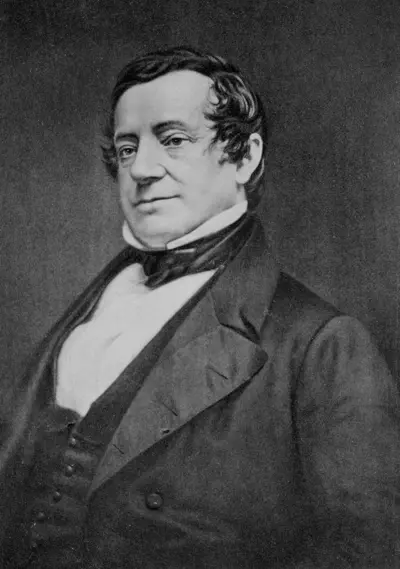
Washington Irving was an American short-story writer, essayist, biographer, historian, and diplomat of the early 19th century. He is best known for his short stories "Rip Van Winkle" (1819) and "The Legend of Sleepy Hollow" (1820), both of which appear in his collection The Sketch Book of Geoffrey Crayon, Gent. His historical works include biographies of Oliver Goldsmith, Muhammad and George Washington, as well as several histories of 15th-century Spain that deal with subjects such as Alhambra, Christopher Columbus and the Moors. Irving served as American ambassador to Spain in the 1840s.
