Lucille Clifton Quotes
They act like they don’t love their country No, what is it is they found out their country don’t love them
Lucille Clifton, 1936-2010, Writer, Educator & Poet, Poet Laureate of Maryland, Poem about Blacks & Patriotism
Sourced by: Eigen's Political and Historical Quotations


In the 1940’s equality and Civil Rights was a good wedge issue for Republicans because the most racist members of Congress were Democrats even though there were many Democrats who advocated strong civil rights. In 1964, there was a party realignment after the Congress passed the Civil Rights Act. After that the most racist members of Congress and the political established switched to the Republican Party and this caused the Republicans to publicly soft pedal civil rights issues. It now became a wedge issue for the democrats, and very few national Republican figures would make such a statement as it would be misinterpreted by the racial right wing of the party.


When the slaves were emancipated, they were free but they were no yet citizens with civil and political rights either. They had no land or other property and racial discrimination in the ex-slave states was vicious and rampant.


In that year he resigned from the War Department in protest of the discrimination and racism in the armed forces.


Robert Allen Zimmerman


She was one of the first prominent white southerners to denounce racial segregation.

This classic quotation illustrates several things. First, the degree of racism that existed in 1944 in West Virginia. Second, not how young Robert Byrd immediately leaped from the possibility of integrating our fighting forces to interracial sex. That has been typical of white racism in America—a preoccupation with race and sex. Last, Byrd who became a member of the KKK, completely changed his mind over the year and ended up supporting the things that, as a youth were worse than the demise of the nation. He matured and grew on the race issue as much of the country did and ended as a strong supporter of equality and civil rights—including affirmative action.


Wilson has been accused of being one of the most racist Presidents since Reconstruction. Even before he was a Governor and a President and presumably had to cater to Southern racist members of Congress, he was a committed racist. Prior to his Presidency, the Federal Government had been making steady progress in hiring African Americans. Under Wilson there was a wholesale firing of a large proportion of them. Some apologists argue that his League of Nations and other major aspirations required the votes and cooperation of Southern Senators who insisted that many of the blacks be terminated. At the same time, the KKK was near the zenith of its membership and political power and was an intimidating force. Wilson’s home state of New Jersey not only had a large KKK membership but there were lynching of Blacks in his own state and when Governor and President he never asked for any anti-lynching legislation.
FHA, in contrast to this administrator’s statement, was a major factor in increasing and maintaining housing discrimination in America. See {637259}, {637269} and {637260} for FHA official manuals which contradict Foley’s denial. He justified the inconsistency by pointing to the words “per se”. The agency never literally told FHA staff to discriminate he claimed. However, most people reading the two examples given above, would get the message that FHA was opposed to inter-racial, non-segregated housing.


Under the previous Republican administrations, virulent and overt racists were not generally appointed especially as they were generally then Democrats. However, when Woodrow Wilson was elected president, he not only appointed many overt racists but he himself may have been one of the most racist Presidents every to inhabit the white House. He fired almost all the Blacks who held positions in the Federal government.
_0_thumbnail_47x47.jpg "A portrait of Richard Allen, a Methodist bishop and founder of the African Methodist Episcopal Church")
Many whites thought that the solution to the problem of free and emancipated Negroes was to send them to Africa. They assumed that the negroes would by desirous of that solution also, but they rarely asked them. When they did, they received answers much like this one from one of the leading Black clergymen in America.
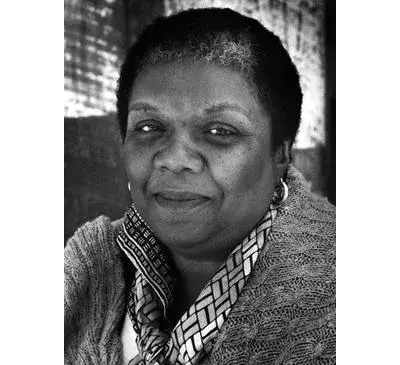
Lucille Clifton was an American poet, writer, and educator from Buffalo, New York. From 1979 to 1985 she was Poet Laureate of Maryland. Clifton was a finalist twice for the Pulitzer Prize for poetry.
