James K. Polk Quotes
The world has nothing to fear from military ambition in our Government
That was an ironic statement. Shortly thereafter we invaded Mexico, occupied the country, pressured it into “selling us much of what is now the Southwest of the United States, and finally left.
James K. Polk, 1795-1849, 11th President of the United States (Democrat), Inaugural Address, March 4, 1845
Sourced by: Eigen's Political and Historical Quotations


Every major Western power and Japan were looking to control parts of China for their own mercantile advantage. The Emperor, her adopted son, had stated that under no circumstances would the Chinese fight, but Cixi issued this decree, in effect, overruling the Emperor—a remarkable occurrence.

This was written when the United States was not a dominant military power. At the beginning of the 20th century, the U. S. had the same size military as Argentina. It was France, German, Turkey and England who had the military superiority and it was they who tended to find excuses for war. After WWII, the U. S. was dominant and was involved with a number of wars and military incursions, often with nations that had not attacked the U.S. Korns’ principle was most dramatic when the George W. Bush administration invaded Iraq on the excuse that the Iraqis were developing weapons of mass destructions and then might attack the United States. After the successful invasion, the excuse was shown to be hollow as there were no signs of sophisticated weapons development.


See {633152} for more of the reasoning for this point. “Neocon” is a shortened form of “neoconservative”. At the time the neoconservatives were advocating use of military intervention in the Middle East. Munich was the German city in which British Prime Minister notoriously tried to appease Hitler and the Nazis. This led to WWII and has become the historical icon for appeasement of a powerful tyrant and the cost of such.


Russia is not the only nation who believed this. There were and are some politicians and military officers in almost every country who believe this. However, for the last few centuries, this has rarely been the view held by the majority of the politicians and military in most nations. And even fewer where the leadership accepted this posiitin. Russia, was one of those counties that did hold this few and kade it policy was in the 2nd decade of 2016,


This size standing army which alarmed so many at the beginning of the 20th century, looked very small when compared with the standing army of America a century later. For earlier American Politician’s views on a standing army, see {592824}, {631687}, {622888}, and {641008}.


Although Great Britain had abolished slavery, British economic interests during the Civil War suffered because of the northern blockade of the South. Much political opinion in England was hostile to the blockade policies of the Union. Bright, a great admirer and supporter of the United Sates and the Union cause was concerned that the United States might drift into War with Great Britain. His letter to Senator Sumner was written with the understanding that it would be in shared with President Lincoln, and it was actually read at a cabinet meeting.


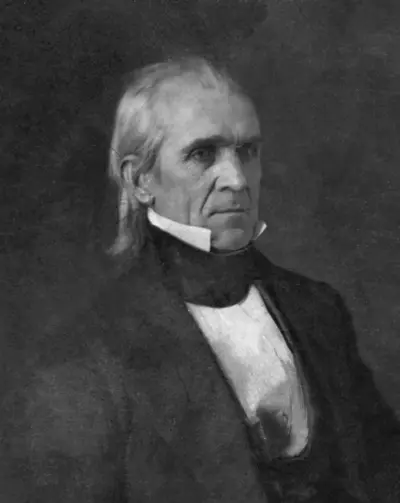
James Knox Polk was the 11th president of the United States, serving from 1845 to 1849. He previously was Speaker of the House of Representatives (1835–1839) and Governor of Tennessee (1839–1841). A protégé of Andrew Jackson, he was a member of the Democratic Party and an advocate of Jacksonian democracy. Polk is chiefly known for extending the territory of the United States through the Mexican–American War; during his presidency, the United States expanded significantly with the annexation of the Republic of Texas, the Oregon Territory, and the Mexican Cession following the American victory in the Mexican–American War.
