Virgil Quotes
The wavering multitude is divided into opposite factions.
Virgil. Eclogues. Georgics. Aeneid: Books 1-6. Translated by H. Rushton Fairclough, revised by G. P. Goold, Harvard University Press, 1999, p. 319.


“Factions” was the word for Political Parties then. Henry, George Washington and other founding fathers were opposed to political parties, while Madison and others thought they needed to controlled. Jefferson thought parties to be important. So there was no uniform consensus among the Founding Fathers. This has his last public speech before his death.


The debate had come to an impasse over the issue of voting and taxation by state equally or proportional to the population. Witherspoon warned of the consequence of there being no agreement on some form of unity.


This quotation is classic as it was the first of a series of attacks that have been made on presidents and other politicians by the economic ultra-rightists when the conservatives had disliked the politician’s economic policies. To criticize the ultra-rich and their corporations was promoting class warfare. And that criticism being made public certainly upset the confidence of the rich in the President. When the president pointed out how the average person feels about the rich, to them it was he who was responsible for the mistrust and hatred by talking about them—not them by what they were doing. This same attack has been made against every Democratic President that came thereafter, but it was first used against Republican Theodore Roosevelt. For many Liberals, the way they know that they are starting to succeed with economic reform is when they get attacked for fomenting class warfare.

At the time, there was great debate about Christian theology and most of it was about esoteric and in the Emperor’s view not very important matters. Over a millennium before the Protestant Reformation, there were huge sectarian religious dissents among the Christians. One was on exactly how Easter was to be celebrated, for example.


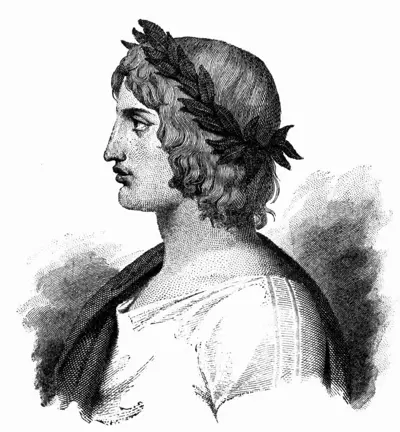
Publius Vergilius Maro, usually called Virgil or Vergil (/ˈvɜːrdʒɪl/ VUR-jil) in English, was an ancient Roman poet of the Augustan period. He wrote three of the most famous poems in Latin literature: the Eclogues (or Bucolics), the Georgics, and the epic Aeneid. A number of minor poems, collected in the Appendix Vergiliana, are sometimes attributed to him as well.
