William Blackstone Quotes
The very being and existence of the woman is suspended during the marriage
In English law, the second a woman married, she ceased to exist and an entity independent from her husband who had total control in the family. This doctrine was carried over to American law. See {629246}.
William Blackstone, 1723-1780, British Jurist, Commentaries on the Laws of England
Sourced by: Eigen's Political and Historical Quotations

This quotation is fascinating because it illustrates the degree to which the Southern people censored themselves on what in most cultures would be morale issues. In many ways the ability to ignore reality made it easier for the Confederate government to operate, but distorted the decisions that were made. Arguably, in most other cultures, public opinion on the reality of the situation would have brought the war to an end sooner and ironically on far better terms than they ended up with. Eggleston was an accomplished writer who had served in the Confederate army of the Civil War. 20 year after the war he wrote a series of articles for the prestigious Northern Atlantic Monthly trying to convey the war from the Southerner’s point of view.


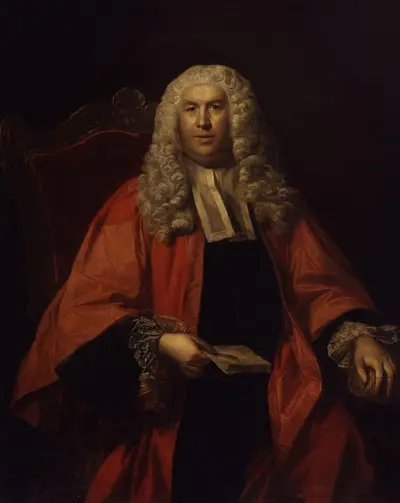
Sir William Blackstone SL KC was an English jurist, judge and Tory politician of the eighteenth century. He is most noted for writing the Commentaries on the Laws of England. Born into a middle-class family in London, Blackstone was educated at Charterhouse School before matriculating at Pembroke College, Oxford, in 1738. After switching to and completing a Bachelor of Civil Law degree, he was made a fellow of All Souls, Oxford, on 2 November 1743, admitted to Middle Temple, and called to the Bar there in 1746. Following a slow start to his career as a barrister, Blackstone became heavily involved in university administration, becoming accountant, treasurer and bursar on 28 November 1746 and Senior Bursar in 1750. Blackstone is considered responsible for completing the Codrington Library and Warton Building, and simplifying the complex accounting system used by the college. On 3 July 1753 he formally gave up his practice as a barrister and instead embarked on a series of lectures on English law, the first of their kind. These were massively successful, earning him a total of £453 (£71,000 in 2021 terms), and led to the publication of An Analysis of the Laws of England in 1756, which repeatedly sold out and was used to preface his later works.
