Keir Hardie Quotes
Of late I have felt, with increasing intensity, the injustice inflicted on women by our present laws. The Party is largely my own child and I cannot part from it lightly, or without pain; but at the same time I cannot sever myself from the principles I hold. If it is necessary for me to separate myself from what has been my life's work, I do so in order to remove the stigma resting upon our wives, mothers and sisters of being accounted unfit for citizenship
The party was not yet ready for women voting. Hardie resigned as Party Leader. In 1910 he agreed to return as Party Leader and the party was then not in opposition to women’s suffrage although many members were still against women voting.
James Keir Hardie, 1856-1915, British Member of Parliament (Labour), Early Organizer and Party Leader of the Labour Party, First Overt Socialist Member of the British Parliament, Speech at the Party Conference, 1907
Sourced by: Eigen's Political and Historical Quotations


The editorial was in support of women’s suffrage—the right to vote which at the time women did not have in Britain. Women were very active in protests and demonstrations. Tactics sometimes involved civil disobedience and chaining themselves to public buildings. It was the civil disobedience and disruptions that the newspaper referred to as the “follies and excesses.” In retrospect today, it is amazing how threatened the society felt and how they reacted to the “threat” of females voting. It does however give us a perspective on those contemporary societies which restrict women’s voting rights.

Billinghurst was physically handicapped without the use of her legs. She protested and marched in protest parades using a hand propelled tricycle which the police sometimes dumped her out of and left her immobile in alleys.


Stowe persuaded Lockwood to stand for President. They tried to recruit a man for the Vice Presidential nomination, and when they could not, Stowe became the first female to become a Vice Presidential candidate.

The following year, women got the right to vote, the first nation to reach that level of enlightenment.


Although she was living proof of a woman’s ability to accomplish what most men could not, she was always publicly differential to men and their sexism. Although she opposed women voting in Parliamentary elections, she did believe that women should vote in local elections where the understood the issues much better.


Although most politicians of the time opposed voting rights, Harding, whose wife was herself a suffragette, and an accomplished woman, tried to lead the nation in the new direction of female equality. It was one of the few laudatory things he did in an otherwise lap luster presidency.


First female presidential candidate & first divorcee to run for that office
He was very conservative in almost all things, but here and with poverty (see {638805}) he was far ahead of his time.

The Organization's Periodical. The statement was repeated several times in variation between 1890 and 1920. This organization was the national leader of similar organizations in over 20 States. Many notables were involved including Louis D. Brandeis, Francis Parkman and John Lowell.


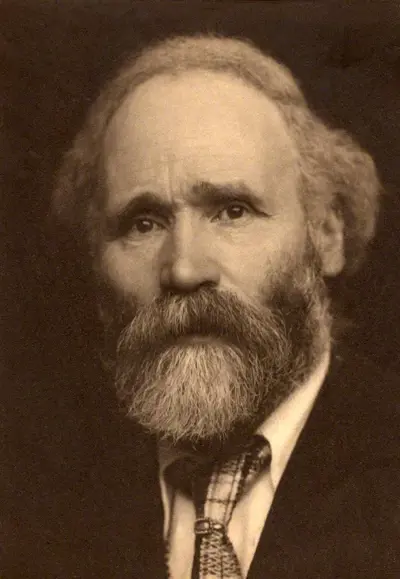
James Keir Hardie was a Scottish trade unionist and politician. He was a founder of the Labour Party, and served as its first parliamentary leader from 1906 to 1908.
