Rose Macaulay Quotes
Naturally I knew it was ridiculous to deprive half the people of the country of any voice in the laws they had to live under, merely on account of a trifling difference in sex, but I did not think anything I could do about it was likely to be helpful.
Rose Macaulay, 1889-1958, British Writer, Coming to London, 1957
Sourced by: Eigen's Political and Historical Quotations

The following year, women got the right to vote, the first nation to reach that level of enlightenment.


The editorial was in support of women’s suffrage—the right to vote which at the time women did not have in Britain. Women were very active in protests and demonstrations. Tactics sometimes involved civil disobedience and chaining themselves to public buildings. It was the civil disobedience and disruptions that the newspaper referred to as the “follies and excesses.” In retrospect today, it is amazing how threatened the society felt and how they reacted to the “threat” of females voting. It does however give us a perspective on those contemporary societies which restrict women’s voting rights.

The concept of taxpayers being entitled to vote to avoid taxation without representation was fundamental to the Founding Fathers. However, the only people who paid taxes were those who owned property as there was no income tax at the time. Since the male controlled the family property, not allowing women to vote did no injury to the basic principle. However, the sexist attitude of the times ran up against this basic principles in the case of widows and unmarried women who owned property. Faced with this contradiction, some of the Founding Fathers like Lee actually favored the voting franchise for women who were widows and property owners or even unmarried female property owners. There were not enough people who saw this contradiction so that all women were originally prohibited from voting, but this quotation shows that it was a political issue at the time.


Having passed this law, the state legislature turned down subsequent efforts to expand the female voting franchise, and Wisconsin women had to wait until all American women finally got the right to vote.

Women were not, in the decisions of Canadian courts “Persons.” As such they were not allowed to serve as public officials and legislators. In 1929 the Judicial Committee of the Privy Council reversed previous interpretations and declared women eligible for all public offices. It became known as “The Persons Case.”


Hunt gave as an example Mary Smith of Stanmore. This quotation is very interesting in the history of women’s suffrage. Hunt was a strong advocate for Universal Suffrage (See {616653}.) At the time, even men had to be a taxpayer and own a sufficient amount of property to vote. Less than 20% of the population of Britain were allowed to vote. The argument at the time was that the husband would represent the family’s interest at the ballot box and there was no need for women to vote. But by facing parliament with the logical inconsistency of its position, he was able to make his point, although there were very few women like Mary Smith who were single and had the economic resources to qualify. Most widows remarried so even if they had economic resources, there was a man who could assume the then perceived role of head of the household.


She was then an invalid trying to recover from the toll of all her work at the front lines of wars had taken. The men she had so helped, did not return the gesture when it came to voting, She did not live to see women get the vote in America.
The classification of women with criminals and lunatics referred to the fact that at this time Women could not vote in New Zealand or any other nation of the world. The following year, much as a result of her efforts, New Zealand became the first country in the world to allow women to vote.


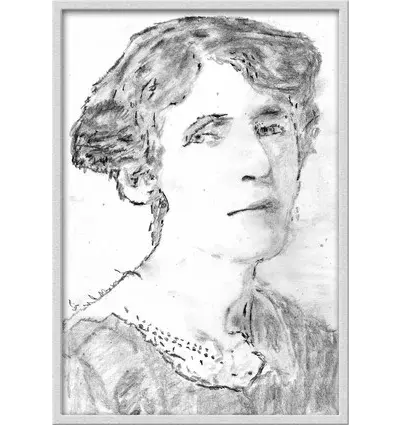
Dame Emilie Rose Macaulay, DBE was an English writer, most noted for her award-winning novel The Towers of Trebizond, about a small Anglo-Catholic group crossing Turkey by camel. The story is seen as a spiritual autobiography, reflecting her own changing and conflicting beliefs. Macaulay's novels were partly influenced by Virginia Woolf; she also wrote biographies and travelogues.
