Thomas Pogge Quotes
The state should never have instituted and enforced legal property rights in persons, and should not have been in the business of returning runaway slaves to their "rightful owners." The whole institution of property in human beings was an unjust social institution and should not have been maintained in existence. It is this sort of thought that I'm appealing to at the supranational level.
Pogge, Thomas. "I am Thomas Pogge, Professor of Philosophy and International Affairs at Yale University. AMA!" Reddit, 2014.


Baron Brougham and Vaux

The first anti-slavery newspaper published in the United States & the first journal in America to advocate immediate, unconditional emancipation

What was particularly interesting about this quotation is that Pinkney was a political leader of Maryland, a slave state. He saw the injustice and immorality of slavery but like many others of our founding fathers assumed that ending slavery would infringe on the property rights of the slave holders. Others argued that there can be no right to deny others their basic rights—property and wealth are subordinate to natural rights. See {632258} and {632259} for more on this point.


Though Leo XIII was very much opposed to slavery, his claim that the Catholic Church “from the beginning” sought to end slavery overlooks the inconsistent reality of several of his predecessors’ teachings. For an example of this inconsistency one may find a relevant example as late as the 19th century, see the teachings of Gregory XVI {611428}, Pius IX {612304}, and Leo XIII {611844}

This was Wesley’s last letter. Wilberforce, a member of Parliament, had been a convert to Methodism and was the leading spokesperson in Parliament for making participation in the slave trade illegal. It would take 16 years of effort before England outlawed participation in the slave trade. Note the distinction commonly made by abolitionists at the time regarding American slavery as the worst of all.

Later changed the name to The Emancipator. Many are surprised that a Southern State would have had such strong abolitionist sentiment so early, but East Tennessee was a hotbed of abolition. See {614117} and {614069}

The first anti-slavery newspaper published in the United States & the first journal in America to advocate immediate, unconditional emancipation
In this quotation Lincoln got out of the rhetorical trap that Douglas had set for him by disclosing his personal preferences as opposed to the positions that Douglas had accused him of being pledged to. See {615827}.
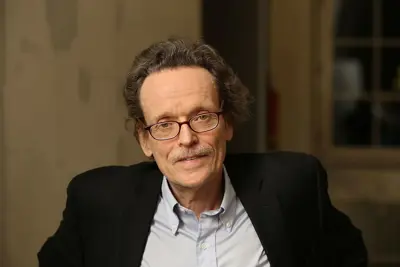
Thomas Winfried Menko Pogge is a German philosopher and is the Director of the Global Justice Program and Leitner Professor of Philosophy and International Affairs at Yale University. In addition to his Yale appointment, he is the Research Director of the Centre for the Study of the Mind in Nature at the University of Oslo, a Professorial Research Fellow at the Centre for Applied Philosophy and Public Ethics at Charles Sturt University and Professor of Political Philosophy at the University of Central Lancashire's Centre for Professional Ethics. Pogge is also an editor for social and political philosophy for the Stanford Encyclopedia of Philosophy and a member of the Norwegian Academy of Science and Letters.
