Gerrit Smith Quotes
I welcomed the organization of the Anti-slavery Society.
Smith, Gerrit. Speeches of Gerrit Smith in Congress. Mason Brothers, 1855.

Fitzhugh was a Southern iconoclast whose view of Northern labor was much like that of Karl Marx but who was an enthusiastic supporter of slavery. Fitzhugh was of the opinion that slavery would be reinstated in the North and his treatise agues for that. More and more intellectual opinion was coming to the conclusion that slavery must be abolished or made universal before Lincoln’s famous statement in his debate against Douglas. Although Northerners and Southerners had come to agree on this point, they disagreed about which alternative would and should prevail.


Later changed the name to The Emancipator. Many are surprised that a Southern State would have had such strong abolitionist sentiment so early, but East Tennessee was a hotbed of abolition. See {614117} and {614069}

This was Wesley’s last letter. Wilberforce, a member of Parliament, had been a convert to Methodism and was the leading spokesperson in Parliament for making participation in the slave trade illegal. It would take 16 years of effort before England outlawed participation in the slave trade. Note the distinction commonly made by abolitionists at the time regarding American slavery as the worst of all.


As an entertainer she had toured much of the world and seen American slavery and that of some other nations. She became a staunch abolitionist and like entertainers in the 20th and 21st centuries she used her celebrity to give anti-slavery lectures and perform for audiences where she donated the proceeds of the event to the abolition cause. She is a particularly interesting political figure in that she seems to be one of the first entertainers to perform for a social cause and become an activist.

Jefferson was then the United States Minister to France. While in Paris he was offered membership by M. de Warville in the Society for the Abolition of the Slave-Trade. Jefferson felt that he had to decline because his joining would have been seen as a politically polarizing act, inappropriate for an Ambassador of the American government which was divided on the issue of slavery. Some criticize the refusal and argue that this would have been the perfect act to push the abolition perspective, and question Jefferson’s sincerity about slavery as he not only refused to join the society, but never freed his own slaves though it is argued that he never made enough money to afford to emancipate them.


This is a memorable historical quotations because it shows the extreme level of hypocrisy and lack of logic of which man is capable of when his way of life and world view is threatened. In this case Gordon sees the right to own slaves as a basic civil right. He does not see that the right of possessing slaves totally denies virtually all civil rights to the slave. In his and other Southern views, to assure a man’s liberty he had to have the right and freedom to deny freedom to others, torture others at will, destroy families and remove all hope and aspiration of some people.
The Emancipation Proclamation was issued by the commander in chief as a wartime necessity. Any future President could undo that proclamation. However, the 13th Amendment outlawed slavery forever regardless of the desires of the Congress, Presidents, or State governments.
There were no women’s shelters in the 19th century, and the police or sheriffs would not entertain a complaint from a wife for assault, sexual or otherwise. She compared the state of women to that of fugitive slaves a few decades earlier. Then there was the Underground Railroad and other institutions which would shelter and help the slaves. There was no such mechanism for women abused in their marriage.

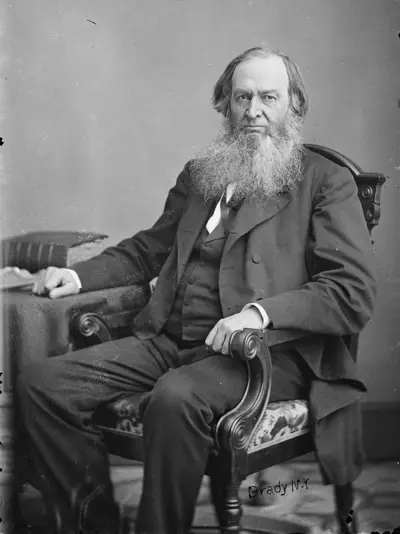
Gerrit Smith, also spelled Gerritt, was a leading American social reformer, abolitionist, politician, and philanthropist. Spouse to Ann Carroll Fitzhugh, Smith was a candidate for President of the United States in 1848, 1856, and 1860, but only served 18 months in the federal government—in Congress as a Free Soil Party Representative, in 1853–4.
