Elijah Parish Lovejoy Quotes
Abolitionists believe that, as all men are born free, so all who are now held as slaves in this country were born free, and that they are slaves now is the sin, not of those who introduced the race into this country, but of those, and those alone, who now hold them and have held them in slavery from their birth.
Lovejoy, Joseph C., and Owen Lovejoy. Memoir of the Rev. Elijah P. Lovejoy; Who Was Murdered in Defence of the Liberty of the Press, at Alton, Illinois, Nov. 7, 1837. John S. Taylor, 1838.


The Emancipation Proclamation was issued by the commander in chief as a wartime necessity. Any future President could undo that proclamation. However, the 13th Amendment outlawed slavery forever regardless of the desires of the Congress, Presidents, or State governments.


The issue of slavery which had been suppressed in Congress for the first decades of the nation broke out when Missouri statehood was considered. By previous agreement, slavery was not even discussed in Congress but the time period elapsed. Tallmadge not only proposed that no more slaves could come into Missouri {613176} but most shocking to the Southerners was that every person born in the new state would be free at the age of 25. In a generation, there would be no more slavery in Missouri and there would be no economic compensation for slave owners at all. The House of Representatives accepted the amendment, but it failed in the Senate. At that time, Senators were not elected by voters but were appointed by the state legislators and the Southern slave states had a disproportionate share of the senate from a population point of view. But what this quotation shows clearly that a majority of the country in 1819 were opposed to slavery and were willing to end it without compensation.


Fitzhugh was a Southern iconoclast whose view of Northern labor was much like that of Karl Marx but who was an enthusiastic supporter of slavery. Fitzhugh was of the opinion that slavery would be reinstated in the North and his treatise agues for that. More and more intellectual opinion was coming to the conclusion that slavery must be abolished or made universal before Lincoln’s famous statement in his debate against Douglas. Although Northerners and Southerners had come to agree on this point, they disagreed about which alternative would and should prevail.

As an entertainer she had toured much of the world and seen American slavery and that of some other nations. She became a staunch abolitionist and like entertainers in the 20th and 21st centuries she used her celebrity to give anti-slavery lectures and perform for audiences where she donated the proceeds of the event to the abolition cause. She is a particularly interesting political figure in that she seems to be one of the first entertainers to perform for a social cause and become an activist.


Under the Mexican law which governed Texas at the time, slavery had been much curtailed. Austin and many others wished to expand it “to permit families to bring the necessary and indispensable house servants and laborers”


Later changed the name to The Emancipator. Many are surprised that a Southern State would have had such strong abolitionist sentiment so early, but East Tennessee was a hotbed of abolition. See {614117} and {614069}
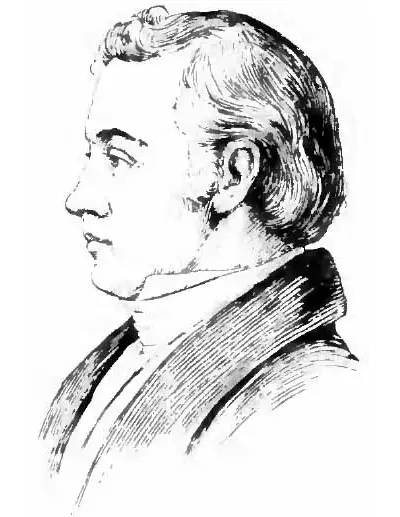
Elijah Parish Lovejoy was an American Presbyterian minister, journalist, newspaper editor, and abolitionist. He was shot and killed by a pro-slavery mob in Alton, Illinois, during their attack on the warehouse of Benjamin Godfrey and W. S. Gillman, where Lovejoy's press and abolitionist materials were stored.
