Charles Gravier Quotes
The quarrel between the colonies and the British government seems to become more serious every day ... It may prove the most fatal blow to the authority of the metropolis.
The French were carefully watching the events in the American Colonies.
Charles Gravier, 1717-1787, Comte de Vergennes, French Foreign Minister, Secret Dispatch to Garnier, the French charge' d'affaires in London, September 11, 1774
Sourced by: Eigen's Political and Historical Quotations

While the official battles of the American Revolution did not begin until 1776, parts of the American colonies were in a de facto state of rebellion and the British could not enforce their laws. See {636925} for another of the King’s statements.

Ramsay was discussing the events leading up to the American Revolution. He and many English historians believe that had the British repealed a few if the hated taxes and given America some representation in Parliament, the conflict could easily have been avoided. Ramsay was the first major historian of the American Revolution.

He was acting as French Foreign Secretary at the time.

The crackdown on Boston which was intended to set an example and intimidate all of the other colonies backfired, and the British were told about it by their own officials in America. But they were so rigid and ideological about monarchy, that the stimulated rebellion rather than suppress them.

2nd Earl of Guilford. This bill cut off all trade with the American Colonies. It was meant as pressure to cease the rebellion. It did not work.

This is the same man who introduced the Stamp Act 12 years before which started the whole problem in America. See {74956}.


The fear of civil war amongst the colonies if they were free from Britain was substantial.

Wilkes was a strong advocate for the American cause—so much so that some in Parliament tried to deny him his seat in Parliament for his disloyal point of view.

This was one of the first and is considered the best of the Colonial writings against taxation without representation. Despite this, Dulany is not well known in American history because when the Revolution finally came he was a loyalist.

Fox was one of the opposition leaders who were opposed to the heavy handed policies that the British King and Government had used.

Ministers refers to the Government Ministers, not to clergy.


This was written more than a year before the American Revolution Battles began. It took time to ship the men and supplies to America and the British did not handle that task with much efficiency. See {636926} for another of the King’s statements.
At that time, Russia and Germany were autocracy, and the ruler could simply take the English money and force the soldiers to fight in a war they had not stake in nor understood.

See {641497} for a quote from the Grenville speech. Fox, a conservative on most issues was an absolute radical on the issue of America. To aggravate the hawks in parliament, he used to dress in the colors of George Washington’s uniform to show his support once the war broke out.
A number of the British Parliament were opposed to using force to get America to accept British taxation and other rules. They thought the trade with America was excellent for both, and the military advantage of the combination was superior to any force on earth. To upset that over who had the right to tax and under what conditions seemed foolish. They counseled negotiations. It was thought at the time that Lord North, the Prime Minister, was perceived to be a hard liner who would not back down regarding America. This quotation describes papers that the professor found that proved that Lord North was not one of the hawks and did not want to send troops to America. However, the King was insistent as he and his hawkish advisors felt that England and the king would be weakened if the world could see America flouting the king. It was a “domino theory” of the effect on all the colonies. North wanted to resign but the king thought him the only competent man in the kingdom who could manage the government and would not allow North’s resignation. The Prime Minister, as a loyal servant of the King, executed the policy he thought unwise and used his political skill to marshal and maintain a majority for a hard line in Parliament. Apparently, he tried to resign over America on several occasions. The world would be very different place had he successfully resigned.

Howe had written Franklin attempting to stave off a American break with England. Franklin, with the approval of the Continental Congress, replied.


This was one of the first and is considered the best of the Colonial writings against taxation without representation. Despite this, Dulany is not well known in American history because when the Revolution finally came he was a loyalist.
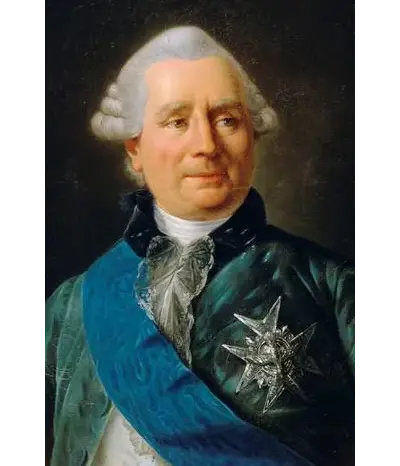
Charles Gravier, Count of Vergennes was a French statesman and diplomat. He served as Foreign Minister from 1774 during the reign of Louis XVI, notably during the American War of Independence.
