Daniel Dulany Quotes
A right to impose an internal tax on the colonies, without their consent for the single purpose of revenue, is denied, a right to regulate their trade without their consent is, admitted.
This was one of the first and is considered the best of the Colonial writings against taxation without representation. Despite this, Dulany is not well known in American history because when the Revolution finally came he was a loyalist.
Daniel Dulany (The Younger), 1722-1797, Attorney, Pamphleteer, Mayor of Annapolis, Considerations on the Propriety of Imposing Taxes in the British Colonies, 1765
Sourced by: Eigen's Political and Historical Quotations

At the beginning of the dispute between America and England, the issue was the raising of internal American taxes by Parliament without any American representation in Parliament. The issue escalated and when the British began using force, independence then became the American objective.

This is the same man who introduced the Stamp Act 12 years before which started the whole problem in America. See {74956}.

The patriot legal position did shift over time. Like many grass roots political movements, the Americans had morality and justice on their side and did not think through the implications of their arguments when they opposed the Stamp Act. After the Revolution Leonard had to leave and he went to English Bermuda where he was rewarded for his loyalty with the position of Chief Justice.


The colonists in America had no representatives in Parliament. Galloway who opposed armed rebellion against Britain {621966} admitted that the British treatment of America was wrong but saw other solutions. It will never be known if any of them might have worked. The world would have been very different had they been tried.

This was one of the first and is considered the best of the Colonial writings against taxation without representation. Despite this, Dulany is not well known in American history because when the Revolution finally came he was a loyalist.

Ministers refers to the Government Ministers, not to clergy.

The French were carefully watching the events in the American Colonies.

This was not quite having representation in Parliament, but the King and the Government would have none of it. We could only speculate on the Americans would have accepted this scheme if it had been offered.


Lee at that time was one of the leaders of the American colonists’ cause. He was born in England and was an old friend of Burgoyne who had just arrived in America. Lee wanted to explain the American viewpoint. Lee later became the senior major general under Washington.
This quotation is very important because it illustrates in the first of our great national political debates, the same views held by extreme, right wing anti-government, and Tea Party adherents regarding government in general and taxation in particular. See {634235} and {634234} for more of his arguments at the Ratification Convention.

Wilkes was a strong advocate for the American cause—so much so that some in Parliament tried to deny him his seat in Parliament for his disloyal point of view.


See {641497} for a quote from the Grenville speech. Fox, a conservative on most issues was an absolute radical on the issue of America. To aggravate the hawks in parliament, he used to dress in the colors of George Washington’s uniform to show his support once the war broke out.

Ramsay was discussing the events leading up to the American Revolution. He and many English historians believe that had the British repealed a few if the hated taxes and given America some representation in Parliament, the conflict could easily have been avoided. Ramsay was the first major historian of the American Revolution.
This was the first proposal for a united American government. It provided for a “President-General” and a unicameral “Grand Council” with representation proportional to population.


While the official battles of the American Revolution did not begin until 1776, parts of the American colonies were in a de facto state of rebellion and the British could not enforce their laws. See {636925} for another of the King’s statements.

This resolution was the trigger that began the debate which became the Declaration of Independence.
Burke was one of the many members of the English Parliament who were opposed to a hard line in America in the beginning of the American Revolution and favored withdrawal after the hostilities began. The hard liners won un England and America was lost.

The did not listen to Pitt or others counseling moderation and ignoring the American acts of protest. Instead, the hawks sent armed troops and war broke out in earnest and the American Revolution reached the point of no return. Lord Chatham was furious at the incompetent handling of the situation by the government and he let them know it—see {641505} .
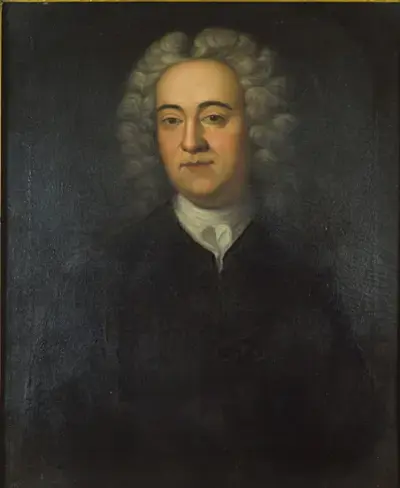
Daniel Dulany the Elder (1685–1753) was a prominent lawyer and land-developer in colonial Maryland, who held a number of colonial offices. In 1722 Dulany wrote a pamphlet entitled The Right of the Inhabitants of Maryland, to the Benefit of the English Laws, asserting the rights of Marylanders over the Proprietary Government.
