Herbert Hoover Quotes
The origins of the principle of the balance of power are lost in the mists of history.
Herbert Hoover, 1874-1964, 31st President of the United States (Republican, IA), Hugh Gibson, U. S. Diplomat and Ambassador, Problems of Lasting Peace, 1942
Sourced by: Eigen's Political and Historical Quotations


The term immediately grew very popular in Germany and soon made its way to the English-speaking countries as “realpolitic”.


This is a view with which most diplomats and foreign policy strategist do not agree. They point to Hitler in WWII where Nazi Germany had enormous power but brought themselves to ruin via terrible strategic decisions that Hitler made. Declaring war on the United States, Invading Russia, and not developing nuclear weapons are 3 of the worst. Many argue that the United States strategy in invading Iraq and diverting resources from Afghanistan was a poor strategic decision.


Mexico was having a dispute with Guatemala and threatened invasion of that country. Blaine warned Mexico against it.


After the economic & power collapse of the Soviet Union, the United States was the only remaining superpower. Givern Russia's diminshed capability and many Americans still carrying resentments about the Cold War, America's foreign policy and diplomacy did not treat Russia as if they were a very important power in the world. Puten greatly resented the fact that Russia was no longer considered or treated like a world power, Russia had a nuclear arsenal and a total delivery system what was in the same destructive potential class as the United States. There were many Russiabs who had similar resentments and Putin sert out to adopt policieis and practices that would force the United States and the other nations to consider them with more dignity, respect and consdideration. This was a typical statement of the period when he was "stoking the fires of Russian resentment.


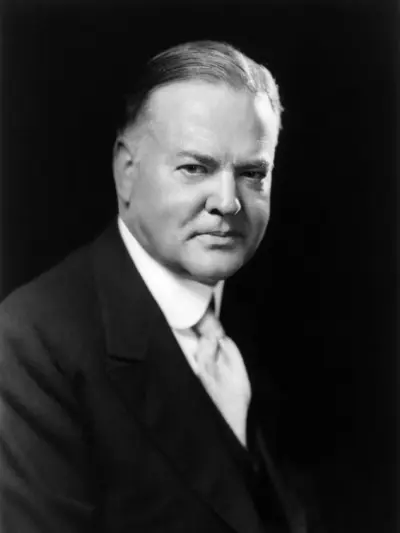
Herbert Clark Hoover was an American politician, businessman, and engineer, who served as the 31st president of the United States from 1929 to 1933. A member of the Republican Party, he held office during the onset of the Great Depression. Before serving as president, Hoover led the Commission for Relief in Belgium, served as the director of the U.S. Food Administration, and served as the third U.S. Secretary of Commerce.
