Arundhati Roy Quotes
The only good thing about nuclear war is that it is the single most egalitarian idea that man has ever had. On the day of reckoning, you will not be asked to present your credentials. The devastation will be indiscriminate.
Roy, Arundhati. The Cost of Living. Modern Library, 1999, p. 98.


He was warning the majority and blaming them for what was to happen. Ironically, at the end of the First World War, Germany was so harshly treated because the allies felt that the Germans had been aforewarned not only by others but by opposition Germans as well.

Kissinger and Nixon were talking about the Russian discrimination and persecution of Jews throughout the Soviet Union. Kissinger had drawn an extreme hypothetical analogy of Russians sending Jews to gas chambers. See related quote. This quotation was uncovered in 2010 when more of the Nixon White House tapes were released. Nixon tended to have the worst stereotyped view of all minority groups.

He was the first man to see the experimental evidence of nuclear power and he realized that it had the potential for an incredibly powerful weapon. It was his message about the possibilities about the atomic bomb that Albert Einstein transmitted to FDR, leading to American development of the bomb.(See {624449}.) By the time the atomic bomb had been developed, Germany had surrendered and Szilard and others felt that there was no longer a need to beat the Germans to the development. So he went from the biggest enthusiast to the most serious opponent.


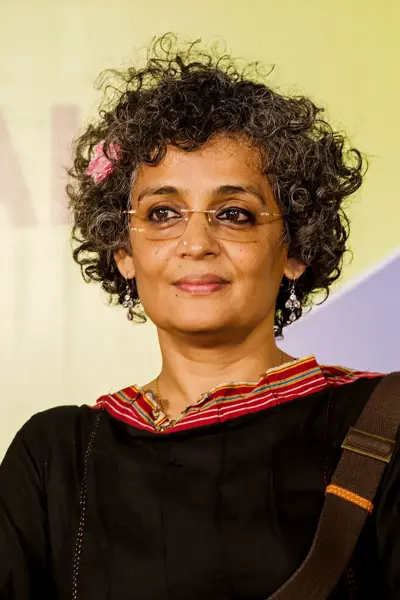
Suzanna Arundhati Roy is an Indian author best known for her novel The God of Small Things (1997), which won the Man Booker Prize for Fiction in 1997 and became the best-selling book by a non-expatriate Indian author. She is also a political activist involved in human rights and environmental causes.
