Ta-Nehisi Coates Quotes
The lives of African-Americans in this country are characterized by violence for most of our history. Much of that violence, at least to some extent, you know, done by the very state that's supposed to protect them.
Coates, Ta-Nehisi. Interview by Terry Gross. Fresh Air, NPR, 9 July 2015.


Instead of standing and saluting as professional athletes have done for decades before games, he kneeled and refused to stand. This caused great public criticism but also some initial support. He was potentially risking his multimillion dollar salary as this technically violated his contract to avoid anything embarrassing to the team. He also donated $1 million to programs in the area that were working to enhance Black/white understanding. Even those who disagreed with his choice of protest defended his right to do so, and after the initial furor, public opinion, while not in agreement about his method, tended to support him for having the courage of his convictions and using his celebrity for a worthy cause. After sensing the public opinion, his team matches his $1 donation. Professional athletes both in the NFL and in other sports then began to do the same as a form of protest for the large, disproportionate, number of black men who were killed, mostly when unarmed, by police. The reference to the “paid leave” was the practice followed by most police departments—usually required by collective bargaining agreements with police unions—of placing police officers accused of committing violations of laws or regulations on paid administrative leave while all the investigations, hearings, and other processes . While this practice protected the rights of those police officers who were not guilty, it ended up paying brutal murders for a some time entire their case was decided or acted upon be the district attorney.


Named after penal reformer Johne Howard, 1726-1790. Howard Associations have since been organized in many countries.


Incredible as it seems today, no Black person had ever dined in the White House as a guest of the President. African American servants were common. And Abraham Lincoln had received many Black visitors as had Presidents after him. But no president had ever had a Black person to dine as a social equal. The photo, reproduced here, illustrates the parity. But that was the worst thing a President could do so far as Tillman and his fellow racists were concerned. They had, since the end of the Civil war, used violence and terrorism to murder, maim and/or intimidate the Negro population to remain in an economic and socially inferior position. In Tillman’s state over these decades they had more lynchings than legal executions and there were plenty of them. Newspapers over the South riled up the whites and there was a wave of terror to be sure that the President’s importune action would not be taken as an endorsement of the Negro’s right to any equality or even dignity. This dinner essentially wedded all the Blacks to the Republican Party and all the Southern Whites to the Democratic Party. This would remain the political situation for over 60 years until the Democrats passed the LBJ Civil Rights Act in 1964 and the Republicans decided to solicit the Southern White racists who accepted the invitation and within a few years, there was a complete reversal of party loyalty of most Blacks and most Southern White Racists.


Black protests and demonstrations were emerging throughout the country after a white police officer shot to death an unarmed black teenager in Ferguson, MO. This argument was made by a number of police apologist whites who could not understand the ferocity and passion of the demonstrations, but Giuliani was the most prominent politician taking that viewpoint. See {642521} for the refutation and response.


Wilson, a history and government professor and college president before politics, was has been accused of being one of the most racist Presidents since Reconstruction. Prior to his Presidency, the Federal Government had been making steady progress in hiring African Americans. Under Wilson there was a wholesale firing of a large proportion of them. Some apologists argue that his League of Nations and other major aspirations required the votes and cooperation of Southern Senators who insisted that many of the blacks be terminated. At the same time, the KKK was near the zenith of its membership and political power and was an intimidating force. Wilson’s home state of New Jersey not only had a large KKK membership but there were lynching of Blacks in his own state and when Governor and President he never asked for any anti-lynching legislation.


Justice Marshall, in he early career played an extremely important role in the development of the law vis a vis race and discrimination in America. He went from town to town in the Jim Crow, segregated South filing and often winning civil rights lawsuits. This was an era where lynching was still prevalent, and he was often threatened with bodily harm or death. Justice Ginsberg who also had been a leader in filing and winning civil rights suits but she worked in the area of women’s rights. The host had stated that she and Marshall were the great legal pioneers in civil rights litigation. Ginsberg explained that she hers was a much easier role and Marshall should receive much more credit. This was her reason.


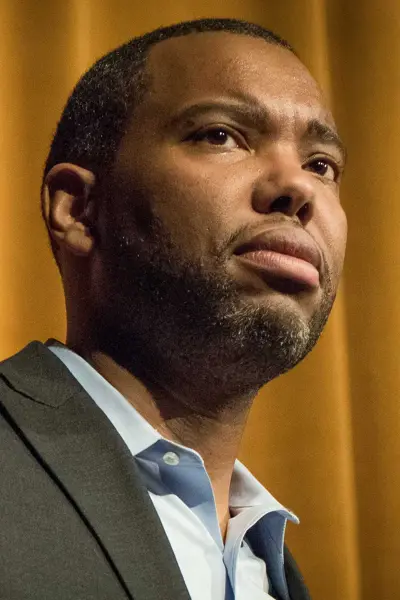
Ta-Nehisi Paul Coates is an American author and journalist. Coates gained a wide readership during his time as national correspondent at The Atlantic, where he wrote about cultural, social, and political issues, particularly regarding African Americans and white supremacy. Coates has worked for The Village Voice, Washington City Paper, and TIME. He has contributed to The New York Times Magazine, The Washington Post, The Washington Monthly, O, and other publications.
