Thomas Paine Quotes
The end of all political associations is the preservation of the natural and imprescriptible rights of man; and these rights are liberty, property, security, and resistance of oppression.
Paine, Thomas. Rights of Man. J. Johnson, 1791, p. 95.


In many countries, the king received all land and most property upon the death of a landowner.


What was particularly interesting about this quotation is that Pinkney was a political leader of Maryland, a slave state. He saw the injustice and immorality of slavery but like many others of our founding fathers assumed that ending slavery would infringe on the property rights of the slave holders. Others argued that there can be no right to deny others their basic rights—property and wealth are subordinate to natural rights. See {632258} and {632259} for more on this point.


This was written and adopted by Vermont a decade before the United States Constitution the ideas for which were in existence in America before the Constitutional Convention in Philadelphia.


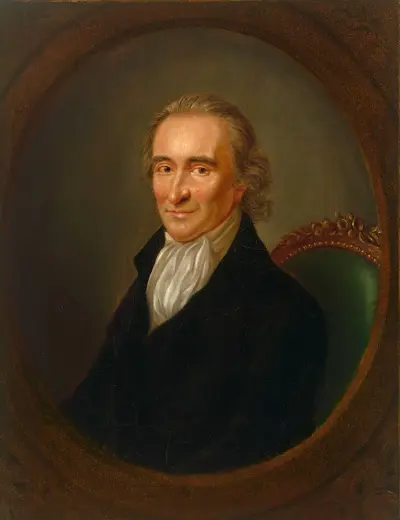
Thomas Paine was an English-born American political activist, philosopher, political theorist, and revolutionary. He authored Common Sense (1776) and The American Crisis (1776–1783), the two most influential pamphlets at the start of the American Revolution, and helped inspire the patriots in 1776 to declare independence from Great Britain. His ideas reflected Enlightenment-era ideals of transnational human rights. Historian Saul K. Padover described him as "a corsetmaker by trade, a journalist by profession, and a propagandist by inclination".
