Samuel Adams Quotes
Among the natural rights of the colonists are these: first, a right to life; second, to liberty; third, to property; together with the right to support and defend them in the best manner they can. These are evident branches of ... the duty of self-preservation, commonly called the first law of nature. All men have a right to remain in a state of nature as long as they please; and in case of intolerable oppression, civil or religious, to leave the society they belong to, and ernter into another.... Now what liberty can there be where property is taken away without consent?
Adams, Samuel. The Rights of the Colonists. 1772. The Writings of Samuel Adams, edited by Harry Alonzo Cushing, vol. 2, G. P. Putnam's Sons, 1906, pp. 351-356.


Hopkins was complaining about the fact that England could tax the colonies and thereby take their property without their consent made the American colonists in the “miserable condition of slaves.” Essentially the fundamental complaint of the Americans was this and in a decade it would erupt as the American Revolution. At the same time, Hopkins was a slave owner and yet saw nothing wrong with that.

In many countries, the king received all land and most property upon the death of a landowner.


Baron Brougham and Vaux


What was particularly interesting about this quotation is that Pinkney was a political leader of Maryland, a slave state. He saw the injustice and immorality of slavery but like many others of our founding fathers assumed that ending slavery would infringe on the property rights of the slave holders. Others argued that there can be no right to deny others their basic rights—property and wealth are subordinate to natural rights. See {632258} and {632259} for more on this point.


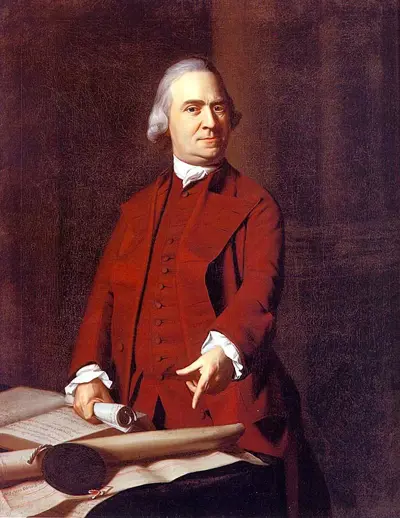
Samuel Adams was an American statesman, political philosopher, and one of the Founding Fathers of the United States. He was a politician in colonial Massachusetts, a leader of the movement that became the American Revolution, and one of the architects of the principles of American republicanism that shaped the political culture of the United States. He was a second cousin to his fellow Founding Father, President John Adams.
