Richard Hildreth Quotes
The currency of any country, whether it be coin or bank-notes, cannot be increased beyond the mercantile wants of that country, without producing a depreciation in the parts which compose the currency.
This is the first major history of banks written in the United States.
Richard Hildreth, 1807-1865, Historian, The History of Banks: To Which Is Added a Demonstration of the Advantages and Necessity of Free Competition In the Business of Banking, 1837
Sourced by: Eigen's Political and Historical Quotations


This was a very astute prediction. At the time, the United States gold mining production was second only to South Africa and American currency was based on the gold standard which seemed to all to be permanent. Half a century later, the U. S went off the gold standard.


The exact phrase has not been found in Gresham's writings but the idea appeared in a 1558 letter to Queen Elizabeth I. The expression has come to be known as Gresham's Law.


The assumption was that money would always be backed by gold or silver. In effect, raising or allaying the money was to change the amount of gold or silver that a particular denomination of money would be able to be exchanged for. This is one of the interesting proofs that these processes did nothing economically—for if they could, no one would want the money. This has always been a weakness or a strength—depending on one’s political point of view—of a gold standard.


At the time, there was no United States currency. Private banks in some of the states issued their own money. A dollar from Georgia might only be worth 75 cents in New York.


The alternative would have been for the colonies to borrow English money at high interest rates and use that. Or use money from private banks (which occurred later.) Many conservatives are today a little shocked that some of the American Colonies just printed money with no backing but it worked—at least at the local level. A Boston Bank for example, would take a large commission for a Bostonian to convert Pennsylvania money into Massachusetts money. So it was not a very good system for trade between colonies and International trade. But English money was used for that. The colonists pragmatically got the “best of both worlds” and paid as little interest as they needed to. This system is essentially what we use today on a national scale with no gold or silver backing of the money.


Most people owned a little land as most of America were still farmers. They had small amounts of money at different times but spent it for necessities. A relatively few people (mostly in the East) had money—gold and paper currency backed by gold. If the price of property was high, only rich could afford to buy it. The home mortgage system did not then exist, so there was no way that the average land owner could get enough money to buy land to expand farms or buy for children unless the price was low. Today, most land owners want the price of land to be high. The financial system in use at the time makes the difference.


At the time, a bank note—paper money issued be a private bank—was not backed by any gold or silver and was not insured bym the government. A bank could print as much as they wanted, so it was always worth less as the further you were from the particular issuing bank, the less you could get your bank note, because no one knew whether or not the issuing bank would redeem the note or even be in existence. So every private bank note had diminished value for the public. However, carrying gold and silver around and making change for precious metals was difficult and often impractical. So people used banknotes. The same thing happens with credit cards today. The merchant has to pay a fee to the credit card company and the bank and therefore charges us more for whatever we buy. But most consumers and merchants are willing to pay the difference to obtain the convenience of the credit card,


This is a very interesting quotation in that it is one of the first suggestions that money debasement can be caused by a lack of trust and confidence in the government rather than the percentage of precious metals in the coins.
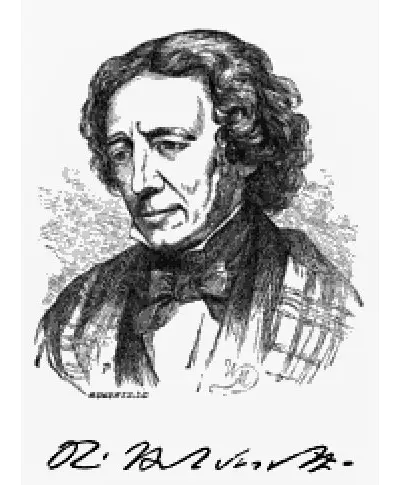
Richard Hildreth, was an American journalist, author and historian. He is best known for writing his six-volume History of the United States of America covering 1497–1821 and published 1840-1853. Historians consider it a highly accurate political history of the early Republic, but with a strong bias in favor of the Federalist Party and the abolition of slavery.
