Frederick Douglass Quotes
The Constitution of the United States knows no distinction between citizens on account of color. Neither does it know any difference between a citizen of a state and a citizen of the United States.
Douglass, Frederick. The Constitution of the United States: Is It Pro-Slavery or Anti-Slavery?. Halifax, T. and W. Birtwhistle, 1860, p. 11.


RSD Party platform. The Russian Social Democratic Party was in 1887 a very modern democratic party inside the feudalism of Tsarist Russia. The Tsar and the nobility thought them wild radicals and yet their party platform was not only reasonable, but in large part influenced by the American Constitution, Bill of Rights, and then current practices in America. It is hard to believe but at the time a Russian could not work at an occupation he chose but could only do the work that was permitted by the aristocrat who owned the land he lived on. The Tsar, Alexander III, was a terrible autocrat, unlike his father who had desired some reform and abolished serfdom. All efforts at any kind of Democratic reform were put down, and Russian reformers in this party tended to split between those who still hoped for reform and those who saw violent revolution as the only hope. By 1906 the party which had no success at any of their planks of reform had split into two main subgroups—the Mensheviks and the Bolsheviks—both active revolutionary groups, but the Mensheviks tended to be more democratic and moderate and wanted to include the workers and the middle class whereas the Bolsheviks saw the middle class as part of the problem and argued for a more radical political structure. The real split occurred after the 1917 revolution when the Mensheviks lost popularity among the Russian revolutionists as not being radical or realistic enough in what it would take to transform Russia. The Bolsheviks gained control and by 1921, they had outlawed and purged the Menshevik party. That was the last hope of democracy in Russia, as the Bolsheviks model was that which guided the country until the fall of the Soviet Union.


Wilson was using logic and consistency to show the absurdity of the proposal to count three fifths of the slaves as people for the apportionment of congressional seats. Particularly difficult for the Southern States to refute was his point that who should other property not be considered in addition to slaves in the apportionment formula? Factories, farms, land value, raw materials, merchandise, etc. That compromise however prevailed regardless of its inconsistency and failure to adhere to any principles. This was the only way to have the South join the new nation.


While this was a type of “Equal Rights Amendment”, It emphasized dignity rather than operations. For example, adultery was made a crime if committed by a woman (not for a man), And women could be dismissed from a job, simply because they were pregnant. And unusual aspect of this quotation is the fact that it applies to equality of dignity of Social status. In America we have this as an unwritten concept of fairness and egalitarianism, but it is not followed very much and certainly not guaranteed by our Constitution.
This was the first major civil rights speech. He had previously in his political career tread carefully in the civil rights arena. The Southerners had disproportionate control over the Congressional committee chairmanships and they could hold up his entire legislative agenda. JFK’s father was a right wing fascist who supported Hitler earlier and always advised against pushing civil rights.


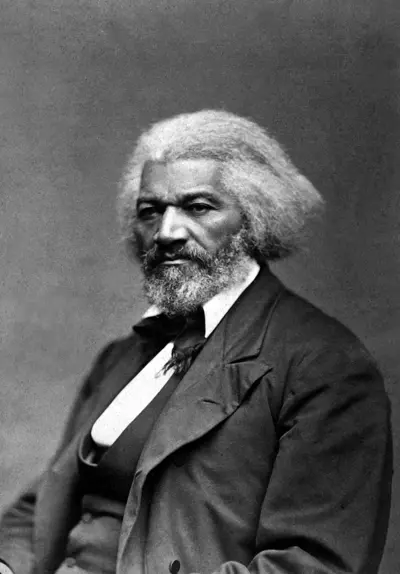
Frederick Douglass was an American social reformer, abolitionist, orator, writer, and statesman. After escaping from slavery in Maryland, he became a national leader of the abolitionist movement in Massachusetts and New York, becoming famous for his oratory and incisive antislavery writings. Accordingly, he was described by abolitionists in his time as a living counterexample to slaveholders' arguments that slaves lacked the intellectual capacity to function as independent American citizens. Likewise, Northerners at the time found it hard to believe that such a great orator had once been a slave.
