James Wilson Quotes
Just what is the light in which we are to regard the slaves? Are they admitted as citizens?" Then why are they not admitted on an equality with white citizens? Are they admitted as property? Then why is not other property admitted into the computation?
Wilson was using logic and consistency to show the absurdity of the proposal to count three fifths of the slaves as people for the apportionment of congressional seats. Particularly difficult for the Southern States to refute was his point that who should other property not be considered in addition to slaves in the apportionment formula? Factories, farms, land value, raw materials, merchandise, etc. That compromise however prevailed regardless of its inconsistency and failure to adhere to any principles. This was the only way to have the South join the new nation.
James Wilson Debate, Constitutional Convention 1787
Sourced by: Eigen's Political and Historical Quotations

This was the first major civil rights speech. He had previously in his political career tread carefully in the civil rights arena. The Southerners had disproportionate control over the Congressional committee chairmanships and they could hold up his entire legislative agenda. JFK’s father was a right wing fascist who supported Hitler earlier and always advised against pushing civil rights.


This was a very courageous speech for the President to give. Senator Hubert Humphrey had proposed civil rights legislation. At the time most of the racial conservative members of Congress were Democrats and not Republicans as they would become after Civil Rights legislation actually passed in 1964. There was little possibility that the civil rights law would pass as the Southern Democrats could filibuster it in the Senate. None the less Truman supported the legislation and the principle of equal rights despite the fact that he was a Southerner and he knew he would lose the support of the conservative wing of his party.


After attending a Lincoln speech, Booth said to Lewis Powell, one of his band of conspirators, “Now, by God, I’ll put him through. That is the last speech he will ever make.”


The Quakers were in the forefront of not only the abolition of slavery but of the integration of the races.


Eight years and a Civil War later, he had changed his mind and was the sponsor of the Civil Rights Act of 1866—the first Federal civil rights law in America. See {587711}.

This was the first named Civil Rights Act passed in the United States. It was passed over the veto of President Andrew Johnson, a Southerner, who tried to thwart Congress’s efforts at Reconstruction.


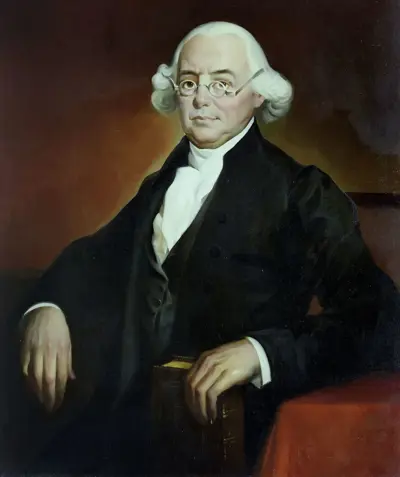
James Wilson was one of the Founding Fathers of the United States and a signatory of the United States Declaration of Independence and the United States Constitution. Wilson was elected twice to the Continental Congress, where he represented Pennsylvania, and was a major force in drafting the United States Constitution. A leading legal theorist, he was one of the six original justices appointed by George Washington to the Supreme Court of the United States.
