Albert Gore Sr. Quotes
The caucus is not open to former Senators.
When Lyndon Johnson was elected Vice President he, as the former Senate Majority Leader, wanted to lead the Democratic Senate Caucus. Gore objected because he thought that violated the separation of powers between the Executive and the Legislative branches, and he wanted the Senate to be independent from the administration. Despite Gore’s objection, Johnson was elected.
Albert Gore Sr., 1907–1998, U. S. Senator (Democrat, TN), January 1964
Sourced by: Eigen's Political and Historical Quotations


Abraham Lincoln was the only third party candidate to win the presidency in U.S. history. However, when he was nominated, there was little conviction among Republicans that a third or fourth party could actually win:. Lincoln's primary opponent, William H. Seward

Adams took the word from one of the Native American terms for a meeting within the tribe and gave it a political meaning that is still in common use.


This quotation is puzzling to many in that Olasky seems to be castigating the President because he wanted to develop a “Great Society”—because he had a great vision for America. However, to Olasky and a small core of religious fundamentalist conservatives a President wanting to develop a great society was bad for two reasons. They do not believe that the government – any government should shape the nature of the society or interfere with individuals and families in shaping society. A government that could have such a vision and implement it must be a big government which is per se undesirable. In addition, in their orthodox view God has already determined the vision for society and no man should try and substitute his vision for God’s commandments. This concern of an energetic secular government having independent vision is not only a problem for the right wing Christian fundamentalists, but is typical of Muslim fundamentalists and Jewish also. There were a small minority of Jewish Israeli fundamentalists who objected to the creation of the State of Israel at the birth of the Jewish state for the same reasons that Olasky gives for opposing a strong visionary government.

This is one of the great erroneous predictions of American political history. He was not nominated on the second ballot. Nor on the third; Lincoln was

Most legislative bodies have rules about when and under what conditions a vote is taken. Amendments, procedures, committees all have procedures where votes may be taken that could defeat a nomination or a proposed law but if those defeats fail, there still is not necessarily a law passed or a nomination confirmed. That has to be a separate vote, often called an “up or down vote.” One parliamentary mechanism for opposing a bill or a nomination is to keep voting on amendments and procedures and never have an up or down vote. This is actually true with the vast majority of the laws proposed in both houses of the Congress. Most never do have an up or down vote. Why Gerhatdt and other ask should judicial nominations be different from any law, or any other presidential nomination? Also see {588517} for another factor.

The sarcasm refers to the power usually held by key committee chairmen and the influence of the White House on Congressional legislation—especially budgetary.


Describing Republican Senator Robert M. La Follette, 1924 Progressive party candidate for President:


The issue of how the federal judiciary would be selected was one of the more hotly debated issues during the Constitutional Convention.

Moyers was also an ordained Baptist Minister. At a White House dinner, Moyers was asked to say grace. He did so in a soft and reverent voice. President Johnson, seated far away, and not hearing Moyers words clearly said in a loud voice, “Speak up, Bill. Speak up.” Moyer’s response followed.
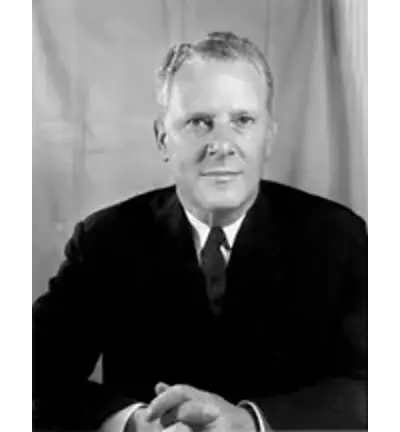
Albert Arnold Gore Sr., sometimes known as simply Al Gore before the fame of his son, was an American politician who served as a U.S. Representative and a U.S. Senator for the Democratic Party from Tennessee. He was the father of Albert A. Gore Jr., the 45th vice president of the United States (1993–2001).
