Kwasi Kwarteng Quotes
The British in South Africa always portrayed themselves as more enlightened and tolerant than the 'narrow-minded', 'intolerant' Boers.
Kwarteng, Kwasi. Ghosts of Empire: Britain's Legacies in the Modern World. Bloomsbury, 2011.

The Boers were lower class, uneducated, farmers from Holland who came to South Africa before the English did. They were at the bottom of the Dutch socioeconomic ladder. Unlike the English who were interest in establishing a trading colony, the Boers just wanted to own and farm the land and use blacks as slave or cheap labor. The Dutch Government and Trading companies lost interest in South Africa as there were much more profitable parts of the world, and they felt no obligation to the Boers whom they were glad to be rid of. So the Boers found themselves having to follow the British laws and rules of the British Colonial Office. Slavery was outlawed, and Blacks could be educated and become citizens under British law. They could own land, and contest the right of the Boers who had settled in some uninhabited land and some that was owned by Black tribes. The Blacks outnumbered the whites in general and the Boers, and there were educated Blacks who “outclassed” the still relatively uneducated Boers. So the Boers, fighting for their “way of life” set up their own area in Southern Africa and claimed independence. But Blacks claimed that it was their land and looked to the British to exercise English law. The Boer war ensued. Although the Boers lost the war, the bred at a much faster rate than the English, many of whom did not even have their families in South Africa. By the end of WWII, the Boer white majority controlled the government and kept the majority Blacks from voting and having full citizenship rights. They dominated Apartheid South Africa until the Black Revolutionists obtained control and although Black and white relations are better in South Africa than most countries, the extemeist Boers and most militant Blacks are in political, but not violent, conflict. Churchill and the British have always perceived themselves as being caught in the middle between the Boers and the Blacks.

Description of the Dutch Reformed Church in South Africa in the 1730’s

The White Africaners were attacking the Blacks to force them off their land so the Afrkaners could take over. The country was under British rule and the unarmed Blacks were being slaughtered by the Afrikaners who were British Subjects. Eventually the Boer War set the English against the Afrikaners. See {583902} for a related quotation.

Gahdhi’s early career was in South Africa. What makes this quotation very interesting is that it shows Ghandi---one of the great disciples of brotherhood and equality of all men---had a period when he was outraged that Indians would have Blacks (Kaffirs) located in their neighborhood. It illustrates the personal transition that he made from prejudiced, parochial advocate for a particular ethnic group to an advocate and spokesman for all mankind.


The song was sung by and inspired many South African patriots including Nelson Mandella. “Barefoot” was the name given to the apartheid Prime Minister Verwoerd. The composer was hung by the apartheid government for refusing to name his revolutionary compatriots.


If the land to be redistributed is divided amongst the majority population, each parcel would be too small to make any difference in any recipient’s life. For efficient agriculture there must be large land holdings. The colonial, stolen land history is valid for most former colonies, however, in Southern Africa, the situation was more complicated. When the whites landed at Capetown in the South, they moved North “stealing” land as they went. However, in Central Africa, Shaka and his Zulus were also a colonial power, and they moved South “stealing” land from the indigenous Blacks as they went. Eventually, the two Colonial Powers—the whites and the Black Zulus—clashed and the Zulu Wars ensued. So all of the land in Zimbabwe and South Aftica was stolen from the Blacks—except about half was stolen by Blacks. After the Zulu Wars, the victorious whites ended up “stealing” land from the Black Zulus that had been stolen by them from other Blacks. Also although the English were the official colonial power, the Dutch “Afrikaners” were a powerful subculture which was dominant on many parts of South Africa and especially at the frontier and they did most of the land stealing. The ethnic English were the businessmen and the city dwellers who actually ruled that Blacks were citizens with rights and slowedmdown some of the land stealing. There is no more complicated ethnic history in the world.

The planners of this particular war effort involved many ideologically correct supporters of a neo conservative agenda from the United States and the other Allies more knowledgeable diplomats and military people were kept our of the effort lest they disagree with administration ideology or policy. The result was a very badly mismanaged occupation phase of the war after a very well managed invasion effort.
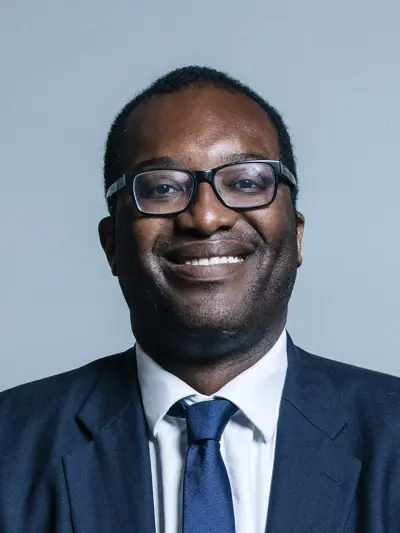
Kwasi Alfred Addo Kwarteng is a British Conservative Party politician serving as Secretary of State for Business, Energy and Industrial Strategy since 2021. He has been the Member of Parliament (MP) for Spelthorne since 2010.
