Denis Goldberg Quotes
We were fighting Nazi racism in Europe and practicing it at home.
Denis Goldberg, Anti-Apartheid South African Activist, Winner of The Albert Luthuli Peace Prize, Describing South Africa during WWII, Interview, Al Jazeera, December 17, 2013
Sourced by: Eigen's Political and Historical Quotations

After the war Donitz was found guilty of Unrestricted Submarine Warfare and using thousands of slave laborers in his shipyards. He was sentenced to 10 years, one of the lightest sentences if the German War Crimes Trials.

Louis Eugene Walcott


There had been vicious assaults on most of the Black workers, when a few Negro welders were hired. The “compromise” was that the Negro workers would be protected from harm but there would be no Blacks in skilled positions. This was despite a huge labor shortage and a critical national need for the ships in the midst of war. Patriotism and the national crisis could not overcome the racism and hatred that existed in America. Northern newspapers pointed out the irony that America was practicing and upholding the racial theories of Hitler and the Nazis.


Chvalkovsky had just returned from Berlin where he had met with Hitler and German Foreign Minister Ribbentrop. He related the meeting to the French Ambassador who reported it to the French Foreign Minister by letter.


While the Western nations were doubtless guilty of blatant racism and anti-Asian discrimination, the Japanese protest was tainted with a substantial degree of hypocrisy. At the Versailles Peace Treaty negotiations the Japanese argued strenuously for equal treatment of Japanese by the West but did not favor extension of the equality principle to Koreans, Chinese, Thais, Chomoros, and other Asian peoples. Japan itself, led by its Emperor, considered other Asian people racially and culturally inferior. Thus they were the inherent leaders of Asia and all Asian people.

The reconstruction to which he referred was the rebuilding of Germany after the First World War. Anti-Semitism distracted most of the people from focusing on the terrible policies that guided Germany into WWI and the incompetent government that was operational.

In his early years, Stalin was a strong opponent of Anti-Semitism ({627514}) but he felt he needed to make a pact with Nazi Germany—the Hitler-Stalin Pact. In meeting with Nazi Foreign Minister Ribbontrop, Stalin as a quid pro quo promised to get rid of “Jewish Domination” (which never existed but there were many Jews in positions) among officials and intellectuals. He then fired his Jewish Foreign Minister Litvonof and replaced him with Vyacheslav Molotov to whom he have this instruction. This was the first major official Anti-Semitism of the Soviet Union but it continued thereafter. See {636526} & {636527}.


See {633578} and {633579} to see some of the Sheik’s quotations on the subject.


At the time, most of the world did not believe that the Germans were literally serious in their anti-Semitic rhetoric. It was assumed that this kind of talk was just populist rhetoric to get votes and maintain power. The main lesson of Nazi Germany is when leaders of a country, threaten the existence of another country or a people, they must be taken seriously, and not just as politicians being populists and pandering to an ignorant, biased public.


He sent this to his German agent who suggested that it not be sent and recommended not answering at all such a disgusting request.


Samuel Langhorne Clemens, 1835-1910

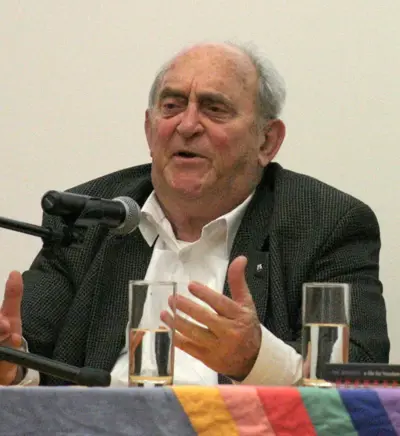
Denis Theodore Goldberg was a South African social campaigner, who was active in the struggle against apartheid. He was accused No. 3 in the Rivonia Trial, alongside the better-known Nelson Mandela and Walter Sisulu, where he was also the youngest of the defendants. He was imprisoned for 22 years, along with other key members of the anti-apartheid movement in South Africa. After his release in 1985 he continued to campaign against apartheid from his base in London with his family, until the apartheid system was fully abolished with the 1994 election. He returned to South Africa in 2002 and founded the non-profit Denis Goldberg Legacy Foundation Trust in 2015. He was diagnosed with lung cancer in July 2019, and died in Cape Town on 29 April 2020.
