Joseph P. Kennedy Quotes
… the betrayal of the American people by Franklin D. Roosevelt
Kennedy hated Roosevelt who had forced him to resign as the U. S. Ambassador to England. Kennedy was an admirer of Mussolini and Hitler. He had allied himself with the part of the British aristocracy that was pro Fascist and opposed Winston Churchill and the democratic element in Britain. Kennedy had opposed aid to Britain to fight Hitler and advised all who would listen that Britain could and would not stand up to Germany. Roosevelt’s support of Britain with Lend Lease and other means proved Kennedy wrong pragmatically and Kennedy’s own statements had forever proved him wrong morally. Although Kennedy opposed our entry in WWII, his sons did not. His oldest son volunteered for a very dangerous mission and was killed. Kennedy blamed his death on Roosevelt {616651} and forever after slandered FDR whenever he got a chance until his son Jack got into politics when his ambition for his son outweighed his hatred.
Joseph P. Kennedy, 1888-1969, U. S. Ambassador to Great Britain (Democrat), Chairman, Securities & Exchange Commission, Father of President John F. Kennedy, Statement to Herbert Hoover after WWII
Sourced by: Eigen's Political and Historical Quotations

Truman told Kennedy to keep quiet or he would "throw him out the window." Truman was about to physically attack Kennedy he was so angry. Kennedy was a Nazi sympathizer and an admirer of Mussolini and Hitler and this ended his active political career. His oldest son Joe was his favorite, but Joe did not share his father’s fascist inclinations. He not only enlisted for service in WWII but he volunteered for a very risky secret mission on which he was killed. Kennedy blamed Roosevelt for assisting England (he had been the ambassador was pro Hitler and had urged against American involvement) and hence the war. Kennedy’s oldest son Joe, had enlisted to fight Germany. He was a pilot who had volunteered for a very dangerous secret mission in which his plane blew up and he was killed. Joseph Kennedy blamed Roosevelt personally for the death of Joe. Driven out of active politics, Kennedy used his wealth to promote his second son’s political career, and JFK and his brothers had managed thereafter to be politicians in the mold of Franklin D. Roosevelt and reject their father’s political philosophy. To this day, most Americans have no idea that the elder Kennedy held such positions.

Browder, had been prohibited by Court Order from touring the country during the 1940 Presidential Campaign. He personally blamed FDR although the Communist vote was so small that no matter where and how Browder campaigned it would not have made any difference. However, the court order gave Browder the opening leading some to believe that the communist following was larger than it was—why else would the establishment want to keep the campaign limited?


In an irony, the first President limited by a term limit amendment pushed by Republicans remembering FDR turned out to be fellow Republican Dwight D. Eisenhower.

Bush had stated when he was running for President that he was opposed to placing America’s nuclear waste in the Nevada mountain which was very unpopular with Nevada voters, but once in the Presidency he changed his position. The reason might have been that there was no backup plan to Yucca Mountain that Bush could select. It was wither Nevada or back to the drawing board with radioactive waste piling up each day.

Roosevelt had withdrawn his Ambassador to Berlin, publicly reprimanded Joseph P. Kennedy, his Ambassador to England who was pro Fascist and who had said complementary things about Hitler and Mussolini. FDR made anti-German statements to a degree unknown for a country not at war. Hitler publically stated that the Germans would not be pressured. Dictators who U. S. leaders have tried to isolate and pressure, have made similar statements ever since. The American intervention was certainly effective against Hitler.

Congress at that time had about a 12 percent public approval rating. Other emergency disaster appropriations had been made in previous years in days or weeks, but the aid for New Jersey, New York and Connecticut had been voted by the Democratic-controlled Senate but not in the Republican controlled House. The Republican House leadership had planned a vote after the Fiscal Cliff vote the previous evening before the end of the Congressional term. Then the speaker cancelled the vote infuriating Christie and many of the members of Congress. His reason was that there was opposition from the Tea Party Conservative wing of his own party who had just been badly beaten on the fiscal cliff legislation, and the Speaker was up for reelection by his own party caucus the following day. If the vote had proceeded, it would have passed with Democratic and some Republican support but with the opposition of the conservative wing some of whom noted that the states seeking the emergency aid had just recently voted for President Obama and they were opposed to more federal spending despite the fact that emergency aid had never before been subjected to such partisan criteria. After much pressure, the Speaker then committed to an up or down vote in the following Congress to the chagrin of some of the Tea Party members. Governor Christie, much admired for his commitment to his state and not politicking was his candid self but he did not even go as far as Republican Congressman Peter King {630995}.


This quotation shows American tolerance and freedom of speech even for our head of state.


One-liner, soundbytes, have been good political oratory long before TV

The Slavery issue was so contentious that many Northern Congressmen had just given up on the abolitionist cause or never agreed with it even though in many areas of the country the majority of their constituents supported abolition.

Hoover, a brilliant administrator before his presidency, was so ideological about the role of government that when the Great Depression came, he was unwilling to use government directly to cope with the new problems. He was turned out of office in favor of FDR and the New Deal which the voters ratified 4 times. Hoover was embarrassed by the New Deal successes and lashed out with many insults. In this case, he called the New Deal “fascist”. See {629055} for another quote where he labels the New Deal communistic. Ironically, Hoover is rated by most historians as one of the least effective Presidents in American history while Roosevelt is always rated among the top 3 presidents.


After JFK’s assassination, many of his appointees who were liberal Democrats, were concerned that LBJ was a Southern conservative and might not want to serve in a conservative administration. Johnson satisfied Heller and all of the other Kennedy appointees who he asked to stay on. Actually, Johnson was more liberal than JFK, and proved it during his Presidency.


This quotation illustrates an interesting phenomenon in American Presidential Politics. There have been Democratic Presidents (FDR and Obama are the most glaring examples) for whom there was vituperative hatred and derision from the conservative Republicans who would frequently refer to them as Socialists and would believe that they were trying to lead the country on the path to socialism. The Presidents always stated that they were opposed to socialism, but to little avail with their conservative haters. But the socialists of the times and even the left wing of the Democratic Party not only did not see them as socialists, but were not very supportive or complementary of their skills and capabilities. Roosevelt reveled in the situation and “welcomed: their hate. Obama was more of a public centrist who tried to avoid the president getting involved in the extreme partisanship of the day.

Although a fervent Nazi, he detested Hitler. When Hitler consolidated power, one of the first things he did in 1934 was to order his guards to murder Strasser, just as Strasser had feared.

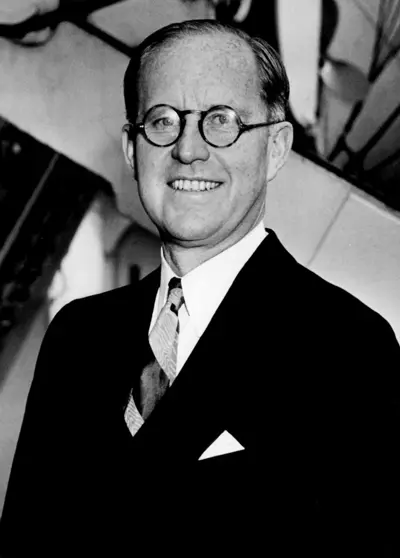
- Born: September 6, 1888
- Died: November 18, 1969
- Nationality: American
- Profession: Diplomat
Joseph Patrick Kennedy Sr. was a prominent American businessman, investor and politician. He is known for his own political prominence as well as that of his children and was the patriarch of the Irish-American Kennedy family.
