Elmer Davis Quotes
You may not like Mr. Roosevelt, but if he loss the war, we all lose it with him.


Lindbergh, a great aviator, was a Fascist who was a great admirer and supporter of Hitler and Mussolini. By this time, even Lindbergh had seen much of the German aggression, and his opposition to the war was on the pragmatic ground that we could not win. He thought that democracy was too unsuited to a country being a major power.


There were a number of world leaders who were not happy about the German Reunification. See Henry Kissinger {610355} for another.


Roosevelt had withdrawn his Ambassador to Berlin, publicly reprimanded Joseph P. Kennedy, his Ambassador to England who was pro Fascist and who had said complementary things about Hitler and Mussolini. FDR made anti-German statements to a degree unknown for a country not at war. Hitler publically stated that the Germans would not be pressured. Dictators who U. S. leaders have tried to isolate and pressure, have made similar statements ever since. The American intervention was certainly effective against Hitler.
Each day the German Airforce was sending air assaults over England. The English defenders were shooting down 2 Germans for every English plane lost. The British however were running out of pilots. Both sides were terribly weakened. However it was the Germans who cracked and called off the air assault prelude to the planned invasion of England.

1st Earl Baldwin of Bewdley. Though members of the same Conservative Party, Churchill was a major opponent of Baldwin’s peace and “appeasement” efforts and publicly castigated Prime Minister Baldwin. Yet Baldwin, if he could not stave off war, wanted his critic to serve as Prime Minister if war was inevitable. Churchill never had much respect for Baldwin. See {626930}.


Note that he assumes that not only will there be another World War, but he assumes that we will be on opposite sides.


At that time there were extensive meetings and discussions for the creation of what was to be the United Nations. The negative view of the United Nations or other international security organization is now and always has been held by a vocal minority in the United States.

Conant, a great scientist in his own right, had the confidence of the political, academic, and industrial establishment and was appointed to the Committee that was to set policy for the Manhattan Project representing President Roosevelt. Germany had been the world leader in Physics before the war. American leaders and scientists were certain that we were in a scientific race with the Germans. Even after Germany had been defeated, President Truman was told that we had beaten the Germans in the race for the bomb. Actually, although almost no one in the US government realized it then, the Germans had NO PROGRAM of nuclear weapons development at all. Hitler did not trust the Theoretical Physics and Theory of Relativity because Einstein and other Jewish scientists had been instrumental in its development. He derogatorily referred to it as “Jewish Science”. Germany bet its scientific efforts on the V2 Rockets and the Jet Airplane, both of which they were successful with but too late to have any material effect on the war. Ironically, even after most of the great German physicists were run out of Germany, there were still two of the greatest who may well have been capable of nuclear weapons development. But neither Werner Heisenberg or Otto Hahn were inclined to engage in that kind of research, and neither of them were even asked whether or not they thought it was possible. The anti-Semitic Nazis just assumed that it could not be. Truman and his associates did not find out for another year or more that there was no race. There was one OSS spy, Moe Berg, who had actually talked to Heisenberg in the midst of the war, and concluded that he not only was not working on an atomic bomb, but was not up on the latest pre-war critical research needed to develop a bomb. Hahn knew and had created the first chain reaction for which he later won the Nobel prize but he was a chemist and didn’t really understand the Physics and mathematics involved in making a weapon and was a confirmed pacifist. Ironically, his colleague, Lise Meitner who had done the physics and mathematics on that experiment was Jewish and had to flee Germany. In Denmark she gave the results to Niels Bohr, who shared them with Leo Slizard and Einstein when Bohr came to the United State and that initiated the famous letter that was sent to FDR which triggered the Manhattan Project. The German first nuclear reaction was used by the Americans because the politicians listened to the scientists, while in Germany, the politicians gave no credence to their scientists and their experiments in nuclear fission.


Hopkins was a social worker with no military of political experience. But the President trusted him implicitly. Most American military officers and Ambassador to England Joseph P. Kennedy, a Nazi sympathizer & father of JFK, believed that England could not stand up to Hitler. Any military aid we gave England would fall into the hands of the Germans. Everyone was shocked when Roosevelt sent Hopkins to England to make a military recommendation. To impress Hopkins with something he thought Hopkins would be interested in, Churchill led a tour of workers cottages built by the government. Hopkins surprised Churchill and his aids who would never forget this statement & then asked to see the military facilities. Hopkins distressed the American military by recommending that Britain could hold out against invasion if they received military aid. Despite the contrary military advice, FDR accepted Hopkins’ recommendations, and the rest is history. He had been right and much of the military wrong.


The only soldier ever so honored. Marshall was then Chief of Staff of the Army. This quotation is historically very important in that it refutes the accusation made by some FDR and New Deal enemies that Roosevelt was very naïve about the importance of capturing Berlin and ceded control over the invasion and capture of Berlin to Stalin and the Soviet Union. Marshall, one of the most upright of politicians in American history, was not a FDR apologist and few doubted his word or judgment. (Senator Joseph McCarthy and other right wingers however falsely accused him of harboring communists in the Army and working against America’s interest against Russia.

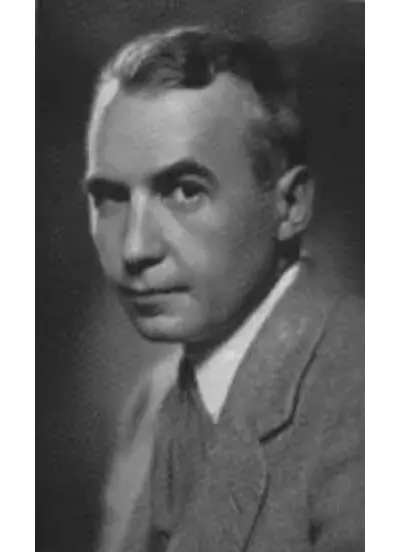
Elmer Holmes Davis was a news reporter, author, the Director of the United States Office of War Information during World War II and a Peabody Award recipient.
