Edward Preble Quotes
[The Barbary States] were a deep designing artful treacherous set of Villains and nothing will keep them so quiet as a respectable naval force near then.
Edward Preble, 1761–1807, Navy Commodore, Leader of the American Squadron Attacking Tripoli in the Barbary War, Quoted in Joseph Wheelan, Jefferson’s War
Sourced by: Eigen's Political and Historical Quotations

Most Americans do not realize that our naval forces were disbanded after the Revolution and even the Constitution did not require a navy. We had some Federal revenue cutters to interdict smugglers but no warships and no permanent sailors or officers. The Barbary Pirates had an incredible extortion racket going in the Mediterranean. If nations would pay them an annual sum each year, they would not attack and seize merchant ships of that country and sell the ships and goods while holding the sailors for ransom. See {640850},86703,{640846} & {640848}
He was referring to attacking the Barbary States. The Barbary Pirates had an incredible extortion racket going in the Mediterranean. If nations would pay them an annual sum each year, they would not attack and seize merchant ships of that country and sell the ships and goods while holding the sailors for ransom. See {640846}.

This quotation illustrates some of the interesting attitudes of early Americans. First, note the backhanded slap at a standing army. The navy was much preferred by early Americans as history had demonstrated that most republics had been destroyed by their own armies taking over in some “emergency” of time of “crisis.” This also helps explain why the army and navy were different departments of government—a tradition that lasted until after WWII. The two departments had totally different purposes and objectives and presented different potential dangers to the nation.


America’s oldest foreign policy problem has been freedom of the seas for American shipping. Since the end of WWII, the U. S. however performed this function—and pays for it—for the entire world with some minor exceptions.

The Barbary Pirates had an incredible extortion racket going in the Mediterranean. If nations would pay them an annual sum each year, they would not attack and seize merchant ships of that country and sell the ships and goods while holding the sailors for ransom.

He was referring to the Algerian Barbary Pirates who had an incredible extortion racket going in the Mediterranean. If nations would pay them an annual sum each year, they would not attack and seize merchant ships of that country and sell the ships and goods while holding the sailors for ransom. Ames was well known for his hyperbole and fear of all the worst possible consequences. He was in many ways like some of the Tea Party of the 21st century who saw immigrants taking over the country and Muslim terrorists in attack on the United States. The Algerians did not have the inclination, skill, or shipbuilding skill to handle trans-Atlantic travel.

The Barbary Pirates had an incredible extortion racket going in the Mediterranean. If nations would pay them an annual sum each year, they would not attack and seize merchant ships of that country and sell the ships and goods while holding the sailors for ransom. President Jefferson had first dispatched American warships and authorized a major land operation which were very effective. Finally, a treaty was negotiated but Decatur reminded the Navy of what brought the Algerians to the negotiating table.
The Barbary Pirates had an incredible extortion racket going in the Mediterranean. If nations would pay them an annual sum each year, they would not attack and seize merchant ships of that country and sell the ships and goods while holding the sailors for ransom. Jefferson refused to pay tribute though John Adams and others urged that he pay just like all the European Powers at the time. So to him it was keeping American ships out of the Mediterranean or some kind of concerted military naval option with the other European powers. For those powers however, the cost of keeping the sea lanes open with naval vessels was expensive and the tribute was a small proportion of the profits of merchant shipping at the time—a decision which many World shippers and nations made about 200 years later regarding the Pirates in Somalia and Asia. They treated it as a cost of doing business. In Jefferson’s case the multilateral idea was contributed by Lafayette. When the European powers were unwilling to participate in a combined military operation, Jefferson chose another alternative. He sent a naval squadron to confront the Barbary Pirates and the states which really controlled them. He did not ask Congress and the President’s war powers vis a vis the Congress have been in dispute ever since.
Raiders operating out of the Barbary Coast typically would attack any American shipping seizing the goods and the ship and ransoming the crew or passengers or selling them as slaves. English and French governments had paid the Tripoli tribute for safe passage. The President and Congress sent American ships to in effect blockade the corsairs in their harbors.


At the time, the Muslim nations of the Barbary Coast commonly seized merchant ships anywhere in the Mediterranean and other oceans. They would sell the cargos, enslave the Christian crews and passengers and then demand ransom for the ships and the freedom of the slaves. However, if nations paid each of the rulers of three countries--Morocco, Algeria & Tunisia--enough annual tribute, ships of the paying nation would not be molested. The European Maritime powers paid the tribute rather than go to war. However, this became a political controversy in the U.S. John Adams and many others wanted to pay the tribute. Jefferson and still others, argued that such tribute should never be paid and war was preferable. This treaty, negotiated by Donaldson and the Algerian Ruler, was a great victory for Jefferson as no tribute would be paid by the U. S.—the only country so exempted. However, it took an invasion of Tripoli lead by U.S. Marines and a massive naval bombardment of Algiers to ‘persuade’ the ruler of Algeria to sign the treaty. Later, the Barbary pirates reneged, and the U. S. did pay a tribute rather than have another war. They did however, pay less than the European powers.

Marie Joseph Paul Yves Roch Gilbert du Motier. The Barbary Pirates had an incredible extortion racket going in the Mediterranean. If nations would pay them an annual sum each year, they would not attack and seize merchant ships of that country and sell the ships and goods while holding the sailors for ransom.

The American sailors had been captured and were being held for ransom by the Barbary Pirates in terrible conditions. The pirates stated that they were slaves and would be sold if the United States did not come up with enough ransom money. After much debate in America, a squadron of Naval Troops had been dispatched to the Mediterranean where they would “negotiate” with cannon—attacking the ports of the Barbary States.


The Assistant Secretary of the Navy to whom he referred was none other than Franklin Delano Roosevelt


Advising of diplomatic negotiations in the Dominican Republic:

The day before, Helms’ deputy testified about the high number of civilian casualties that American bombing of North Vietnam had caused.
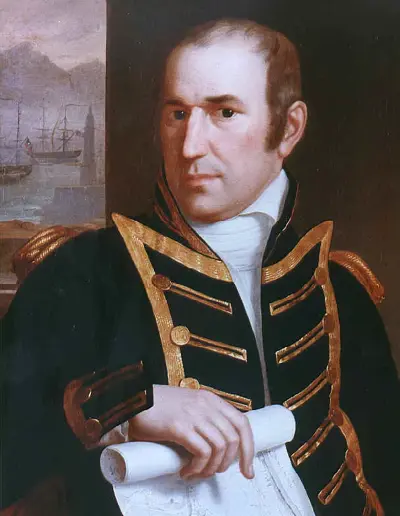
Edward Preble was a United States naval officer who served with great distinction during the 1st Barbary War, leading American attacks on the city of Tripoli and forming the officer corps that would later lead the U.S. Navy in the War of 1812.
