Calvin Coolidge Quotes
The attempt to regulate, control, and prescribe all manner of conduct and social relations is very old. It was always the practice of primitive peoples.
Coolidge, Calvin. "Address at the College of William and Mary, Williamsburg, Virginia, May 15, 1926." Foundations of the Republic: Speeches and Addresses, Charles Scribner's Sons, 1926.


There are fundamentalist Muslim nations and subunits throughout the world, which make it a criminal offense for a women to exercise what, in the West and according to the UN International Charter of Human rights, are her legitimate rights. The punishments in some of these communities are very brutal and barbaric. Under Canadian law and policy a person who is in fear for their safety and/or life because they are exercising a fundamental right are eligible for political asylum and immigration status in Canada. Mayfield and a few other conservative Canadian legislators do not see the issue of women’s required dress as being in the same category of freedom of speech, criticism of the government, or the practice of one’s chosen religion. The same people generally favor more restrictions on immigration anyway, and they would not give Canadian asylum to women so aggrieved. Those legislators seem all to be men. The women in Parliament and the majority of the men do not agree, have maintained the right of women to seek asylum for these reasons.


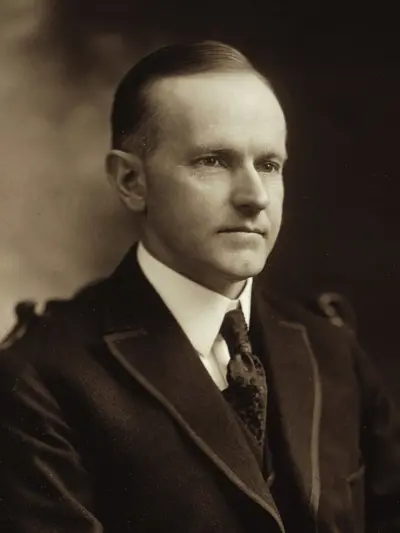
Calvin Coolidge was an American lawyer and politician who served as the 30th president of the United States from 1923 to 1929. A Republican lawyer from New England, born in Vermont, Coolidge worked his way up the ladder of Massachusetts state politics, eventually becoming governor of Massachusetts. His response to the Boston Police Strike of 1919 thrust him into the national spotlight and gave him a reputation as a man of decisive action. The next year, he was elected the 29th vice president of the United States, and he succeeded to the presidency upon the sudden death of Warren G. Harding in 1923. Elected in his own right in 1924, he gained a reputation as a small-government conservative and also as a man who said very little and had a rather dry sense of humor.
