Bulent Ecevit Quotes
The armies, the difference of all of those armies that had been fighting each other and the Taliban took advantage of that to rule over the whole country.
Ecevit, Bulent. Interview by Margaret Warner. The NewsHour with Jim Lehrer, PBS, 16 Jan. 2002.

The problems of Iraq regarding internecine ethnic struggles have not changed in 60 years. See {586486} for another example.


Warning to John Calhoun and other South Carolinians about the implications of their nullification of the Tariff Act of 1832:

In Burundi, family land is divided among the male children of a family. The average Burundian woman has 6.3 children at that time, nearly triple the international fertility rate. With this population growth rate, the plots of land for each person inevitably get smaller and smaller over time. At 10,745 square miles, Burundi is slightly smaller than the U.S. state of Maryland, but it holds nearly twice as many people: about 10 million. The small plots of land are inefficient to farm and provide subsistence. So the nation was in a crises as there was little industrialization and land was essential for existence for most Burundians. See {35807} and {35809}." Andre Florian Nbasimana


This quotation shows what prompted the Texas rebellion against Mexico. Military dictators had taken over the Federal Government of Mexico and Mexico was no longer a free country.

He was referring to Bosnia and other nations where civil war seems to break out over and over again—albeit much stimulated by outside forces.

King George did not want to give up the American Colonies and claimed the loss at Yorktown was just a loss of a single battle. The English soldiers had controlled New York, Charlestown and other places and American Tories wanted to fighting to continue. The French were having major problems elsewhere and the states were all broke from the war effort. Hamilton urged Clinton to offer all the New York offers and soldiers half pay tp be available to fight against the other ex-colonies represented in the Continental Congress.


President Lincoln and Several of the Commanding Union Generals had declared that black slaves were free during the midst of the Civil War under the legal theory that if the slaves were property of the rebels, then they cold be seized as “contraband” and removed from the control of those who had committed treason. The question was, what would happen to those now free Negroes after the war? Many Negro leaders were anxious that if there were surrender, then the status quo ante might prevail and the Negroes—many have who had fought for the Union might be returned to slavery. This speech by the Secretary of State alarmed them further. This is why the Emancipation Proclamation was so important and even that might have been overturned by a subsequent President. This is why Lincoln, the white radical Republicans and the Black leadership placed so much emphasis on passing the 13th Amendment.

He had just assumed his post 6 days earlier. At this point he did not have enough knowledge to favor or oppose the regime change, but he did realize that the decision was a serious one and there would be no turning back. Diem was a creature of the Central Intelligence Agency. An anti-Communist Christian in a Buddhist county, the CIA engineered his rise to power, created his political party, provided him with cash to bribe other Vietnamese politicians, and paid for all the propaganda so he would “win” the Presidential elections. However, he abused the Buddhists, was thoroughly corrupt and ran a corrupt administration, but worst of all from the American point of view, he was unable to motivate the South Vietnamese population to fight the Communists. He reached the point where he was more of a liability, and the Central Intelligence Agency engineered a coup d’etat to remove him from power and replace him with a President more to our liking. (See {634540}.)


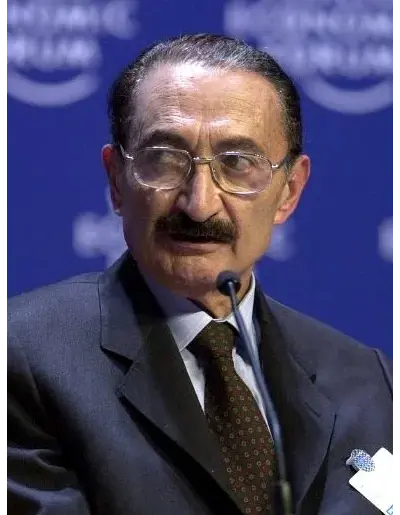
Mustafa Bülent Ecevit was a Turkish politician, poet, writer, scholar, and journalist, who served as the Prime Minister of Turkey four times between 1974 and 2002. He served as prime minister of Turkey in 1974, 1977, 1978–79, and 1999–2002. He was the leader of the Republican People's Party (CHP) between 1972 and 1980, and in 1989 he became the leader of the Democratic Left Party (DSP).
