Aristotle Quotes
That which most contributes to the permanence of constitutions is the adaptation of education to the form of government, and yet in our own day this principle is universally neglected. The best laws, though sanctioned by every citizen of the state, will be of no avail unless the young are trained by habit and education in the spirit of the constitution.
Aristotle. Politics. Translated by Benjamin Jowett, Clarendon Press, 1885, p. 168.


those engaging in civil disobedience This was written in Scotland before Witherspoon emigrated to America. A major issue of political and religious debate at the time in Scotland was civil disobedience. “Reform” religious advocates argued for the moral propriety of civil disobedience where the protester’s conscience felt that the laws were immoral and unjust. The were referred to as “Moderates.” Witherspoon, early in his career, was one of the conservatives who argued then, against the Moderates, that civil disobedience should be punished very severely. The conservative rhetoric at the time sarcastically referred to protestors as having “tender consciences.” The issue was contentious then, later in America, and is so even today.


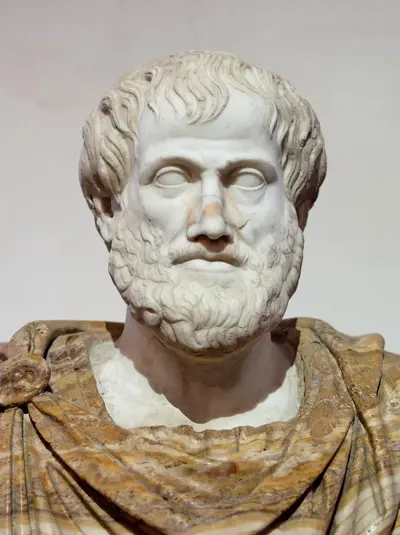
Aristotle (/ærɪˈstɒtəl/; Greek: Ἀριστοτέλης Aristotélēs, pronounced [aristotélɛːs]; 384–322 BC) was a Greek philosopher and polymath during the Classical period in Ancient Greece. Taught by Plato, he was the founder of the Lyceum, the Peripatetic school of philosophy, and the Aristotelian tradition. His writings cover many subjects including physics, biology, zoology, metaphysics, logic, ethics, aesthetics, poetry, theatre, music, rhetoric, psychology, linguistics, economics, politics, meteorology, geology and government. Aristotle provided a complex synthesis of the various philosophies existing prior to him. It was above all from his teachings that the West inherited its intellectual lexicon, as well as problems and methods of inquiry. As a result, his philosophy has exerted a unique influence on almost every form of knowledge in the West and it continues to be a subject of contemporary philosophical discussion.
