Thomas Hart Benton Quotes
That the said resolve (censuring President Andrew Jackson) be expunged from the journal; and, for that purpose, that the Secretary of the Senate, at such time as the Senate may appoint, shall bring the manuscript journal of the session 1833-1834 into the Senate, and, in the presence of the Senate, draw black lines around the said resolve, and write across the face thereof, in strong letters, the following words: "Expunged by the order of the Senate, this 16th day of January, 1837.
President Andrew Jackson had been censured by the Whig Controlled Senate for withholding documents related to his defunding of the Bank of America. When the Democrats gained control of the Senate, they voted to erase history by expunging the original censure from the records and journals of the Senate. This is one of the worst examples of naked partisan politics in American history. In all of American History there have been two Congressional censures of American Presidents. This was one. See {620951} for the other.
Thomas Hart Benton, 1782-1858, U. S. Senator (Democrat, MO), . Expunging Resolution, introduced into the U. S Senate, 1837
Sourced by: Eigen's Political and Historical Quotations

The Mexican War was as controversial as any war in American History. President Polk ordered action independent of the Congress, In all of American History there have been two Congressional censures of American Presidents. This was one. See {594521} for the other.


The Supreme Court had decided to hear an important case on gun rights. Cheney had discovered that Solicitor General, the Administration’s chief lawyer before the Supreme Court, Paul Clement planned to file a brief that was very different from Cheney’s own personal views. In protest, he signed his name to a much stronger brief filed by 55 pro-gun senators and 250 members of the House of Representatives. The President’s Chief of Staff called Cheney on the carpet for doing something that was unforgivable—the Vice President had publicly criticized the position that the President’s (and the Vice President’s) chief lawyer was taking. See Cheney’s excuse {633773} . Bolton let the vice president know that if he ever tried something like this again, he would be frozen out of most government activities. In Bush’s second term Cheney had less and less influence, in part because of his unethical behavior like this.

The Bush Administration tried to implement secretly 3 very controversial programs and after much rancor, the Supreme Court and the other Federal Courts ruled that they did not have the Congressional authority to implement the programs and some aspects were unconstitutional in any event. Bush received advice not to go to Congress and ask for the authority to operate the programs because the ensuing debates would be very polarizing, would probably not pass the Congress, and would further drive down the public’s approval of Bush which was sinking anyway. However, in retrospect, Bush realized that regardless of the costs, it is worse to try and implement controversial programs in secret and to have to argue that the executive branch implicitly has the power to add to its powers and authority.


Despite having passed the House and a majority of the Senate favoring McCain’s bill, a filibuster was led by a few holdouts from his own party. Patiently, McCain assembled sufficient Senate support to break the filibuster.

This was an amazing statement for an all powerful Roman Emperor. Few national leaders—even in democracies would go this far. In early America, some Presidents had this attitude and saw themselves as servants of the Congress to a great extent. Over time, the power of the Congress diminshed and that of the Presidency grew, and no modern president considered himself the servant of the Congress.

President Andrew Johnson had been impeached by the House of Representatives and was being tried in by the Senate. A majority of the Senators voted for conviction but the vote was 1 short of the two-thirds that were needed. Johnson remained in office. These were two of the charges against Johnson. A Century later Presidents commonly did both of these. George W. Bush made reappointment of Senate rejected nominees into an art form but after the Johnson trial, these were never to be considered reasons for impeachment again.

This is a very interesting historical quotation. The House and the Senate closed the galleries because America was in the midst of the most fatal outbreak of disease in its history. It was the Flu, but that year it was a particularly virulent strain—the first time the world had seen the H1N1 strain. There was no vaccine then and about 100 million people died worldwide. In America more than ½ million people died. It was the worst Pandemic in history—it killed more people than the Black Plague even. The medical authorities did realize that the flu was spread from person to person but other than keep people from congregating in groups as in the Congressional galleries, there was little they knew about what to do.

In the Canadian, British and some other Parliamentary systems of government, the Prime Minister must appear weekly or periodically in the House of Commons and be subjected to any questions that are asked. He/she cannot claim Executive Privilege or simply not answer questions as in the American Presidential System.

They were discussing the Civil Right Bill of 1964 which they all wanted to pass. See {605438} . However, they faced a filibuster from the Southern Senators who had always before used this tactic and blocked Civil Rights legislation. However, the President here committed himself to the one way to take most of the power out of the filibuster. Accept a shutdown of the Senate, give up the rest of the President’s legislative program but the filibuster blocks all legislation that the Southerners wanted like cotton and tobacco subsidies.

Periodically in American history, there has been a struggle between the Executive Branch and the Senate for dominance. The Senate’s power is negative however. It can block things, but cannot directly make them happen. The President can do both.

The president had the 113th Congress—the most unproductive congress in American history. The Democrats controlled the House and the Republicans controlled the House of Representatives. But the Republicans were badly split between the regular Republicans and the Tea Party republicans who did not want to pass any legislation that would cost money or would make the President look good. The Republican Speaker of the House was not very strong and could not control or even coordinate his own party. So Obama did what Abraham Lincoln and Theodore Roosevelt had done with difficult Congresses, and found as much as he could do by issuing executive orders which did not need Congressional approval. Some of the Republicans were outraged that he was doing what the great Republican Presidents had done earlier and end-running Congress.


Although the Jacksonian Democrats were the political successors to the Jeffersonian Democratic Republicans, Jefferson found Jackson wanting as a potential president. Although Jefferson had made this statement during the 1824 Election, it did not become public until the Election of 1828 — Jackson’s second term. At that time Edward Coles, Formerly James Madison’s Secretary, disclosed the quotation.

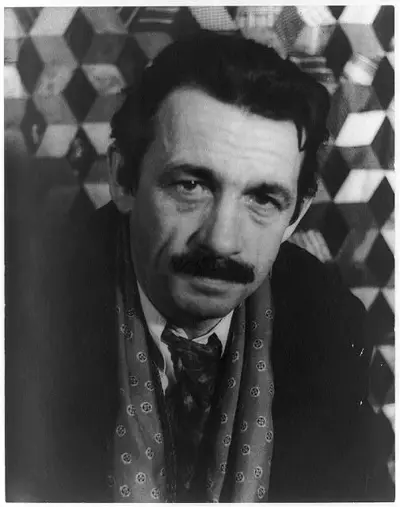
- Born: April 15, 1889
- Died: January 19, 1975
- Nationality: American
- Profession:
Thomas Hart Benton was an American painter and muralist. Along with Grant Wood and John Steuart Curry, he was at the forefront of the Regionalist art movement. The fluid, sculpted figures in his paintings showed everyday people in scenes of life in the United States. His work is strongly associated with the Midwestern United States, the region in which he was born and which he called home for most of his life. He also studied in Paris, lived in New York City for more than 20 years and painted scores of works there, summered for 50 years on Martha's Vineyard off the New England coast, and also painted scenes of the American South and West.
