John Randolph Quotes
Does not the President ... submit this subject to Congress for their sanction? Does he not recognize the principle ... that no treaty is binding until we pass the laws for executing it?”
John Randolph, 1773-1833, U. S. Congressman & U. S. Senator (Democratic Republican, VA), U. S. Minister to Russia, Objecting to the fact that President Thomas Jefferson negotiated and completed the Louisiana Purchase, the largest foreign policy treaty at that time, but did not submit it to the Senate for Ratification.
Sourced by: Eigen's Political and Historical Quotations


When the Senate was debating the Gulf of Tonkin Resolution, which would empower the President to take "all necessary measures" to repel any armed attack on U. S. forces, Senator Morse was one of only two Senators opposing the resolution:


From this quotation, {624648} and {615901} it is clear that the framers of the Constitution intended the treaty making powers to be shared by the President and the Senate. In practice, in modern times treaties are usually initially negotiated by diplomats under the supervision of the President and the Senate gets to concur or not in the ratification process. However, there have been a number of treaty failures including the League of Nations where the lack of coordination has resulted in a situation where the Senate had to accept or reject something which the President had negotiated and the Senate rejected the treaty.


President Abraham Lincoln had pocket vetoed his own party's reconstruction bill in the midst of an election year.

The naval hero was approached as to his reception to a presidential draft. His famous response eliminated most interest in him. If Congress selected the President, he may well have won.


On why the President should not be given the right to go to war without the approval of Congress:

Monroe was then Secretary of State.
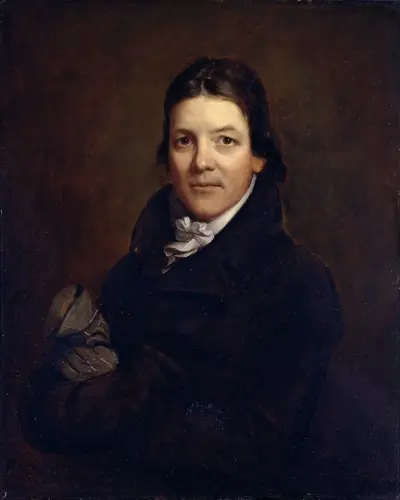
John Randolph, commonly known as John Randolph of Roanoke, was an American planter, and a politician from Virginia, serving in the House of Representatives at various times between 1799 and 1833, and the Senate from 1825 to 1827. He was also Minister to Russia under Andrew Jackson in 1830. After serving as President Thomas Jefferson's spokesman in the House, he broke with the president in 1805 as a result of what he saw as the dilution of traditional Jeffersonian principles as well as perceived mistreatment during the impeachment of Samuel Chase, in which Randolph served as chief prosecutor. Following this split, Randolph proclaimed himself the leader of the "Old Republicans" or "Tertium Quids", a wing of the Democratic-Republican Party who wanted to restrict the role of the federal government. Specifically, Randolph promoted the Principles of '98, which said that individual states could judge the constitutionality of central government laws and decrees, and could refuse to enforce laws deemed unconstitutional.
