Ferdinand II Quotes
That every secularization of a religious foundation, mediate or immediate, by the Protestants, subsequent to the date of the treaty, was contrary to its spirit, and must be revoked as a breach of it.
Ferdinand II, King of Hungary, Quoted in Friedrich Schiller, History of the Thirty Years' War
Sourced by: Eigen's Political and Historical Quotations

Kennedy was being hurt be fears that as a Catholic, he would be beholden to the Pope and the Catholic Bishops. There were many protestants who believed that the Catholic Church was antithetical to democracy and some who even believed that Catholicism was the religion of Satan. Kennedy decided to confront the issue head on.


Judge Moore was trying to justify oaths to God or other state references to a Judeo-Christian God as not violating the 1st Amendment stricture about the government endorsing a particular religion. Note however his {33827} quotation.


It took only 10 days after the First Continental Congress met for religious bigotry to arise. After hundreds of years of Catholic/Protestant strife, each sect looked upon the other, not only as theologically wrong, but dangerous to the liberty of the other. Unfortunately, the organied religions had acted so badly towards other religions, that everyone was justified in fearing the other religions. This quotation illustrates a then typical attitude of many American Protestants that the Catholic Church was a threat to national security. Ironically, in modern times, anti-Catholic bigots use this quotation to demonstrate that the United States was founded as a Christian Protestant nation—not a general Christian nation. A small, vicious anti-Catholic sentiment still exists, usually by a minority of right wing Protestant religious fundamentalists. Protestant England had just repealed the laws making Catholicism illegal, but this was regarded at that time as intolerable for the new America. This was one of the disputes which that the Founding Fathers were faced with later and one of the reasons that they were so absolute in the need for the 1st Amendment.


This is a particularly interesting historical quotation because it succinctly gives a history of the various horrors of religious strife in British history—a history that was very well known to the American Founding Fathers and the general American Colonial population. This history was the major driver behind the public insistence for the Bill of Rights and the 1st Amendment which erected a wall of separation between church and state with government never favoring or abetting any particular religion.


The King Outlawed Protestant Worship.


The letter was in response to the King’s letter commanding him and all the other governors to massacre all the Protestants in his district. Montmorrin, a Catholic, died suddenly and shortly thereafter. It is supposed he and one other objector (Viscount Orthez) were poisoned by order of King Charles. All the other governors obeyed and 50,000 Protestants were murdered in the Massacre of Saint Bartholomew.

The treaty, which was also ratified by the Senate, was actually drafted by Joel Barlow, the U. S. Consul in Tripoli. It was the first official statement of the United States on its religious basis or lack thereof.


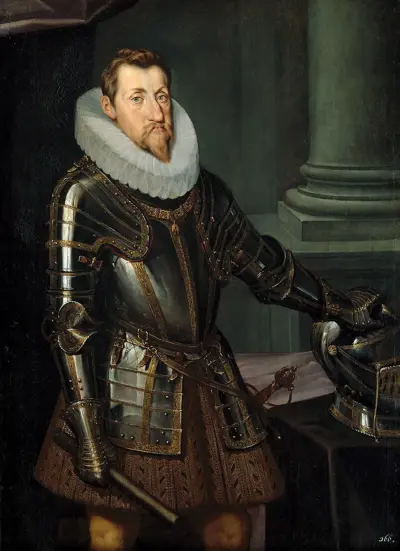
Ferdinand II, a member of the House of Habsburg, was Holy Roman Emperor (1619–1637), King of Bohemia (1617–1619, 1620–1637), and King of Hungary and Croatia (1618–1637). He was the son of Archduke Charles II of Inner Austria, and Maria of Bavaria. His parents were devout Catholics, and, in 1590, they sent him to study at the Jesuits' college in Ingolstadt, because they wanted to isolate him from the Lutheran nobles. In July that same year (1590), when Ferdinand was 12 years old, his father died, and he inherited Inner Austria—Styria, Carinthia, Carniola and smaller provinces. His cousin, the childless Rudolf II, Holy Roman Emperor, who was the head of the Habsburg family, appointed regents to administer these lands.
