Craig Ferguson Quotes
Thank heaven Election Day is over. No more campaign ads, no more mud-slinging, no more candidates pretending they're straight. It's over!
Ferguson, Craig, host. The Late Late Show with Craig Ferguson. CBS, 2005-2014.


See {583344} for Dewey's famous reply.


Sinclair was a writer who had written about some of the worst scandals in American politics, leaned toward socialized democracy, and decided to run as a reform candidate in California where he lived. He won the Democratic primary easily even though he had no money, political experience, or backing. He terrified the Republicans who ran one of the dirtiest campaigns in American History to defeat him spending more money than in any election up to then including the Presidential elections. (for more details see {619613}) Sinclair lost, but it was close.

The ad, created by Tony Schwartz, only ran once, on September 7, 1964. It was so dramatic that News and other media replayed it and discussed it up until the election. LBJ’s opponent Barry Goldwater was a military hawk in the midst of the Cold war where nuclear war was everyone’s greatest fear. The Daisy ad was crystal clear and made overt what many Americans concern was about Goldwater. Johnson won in a landslide. See {586351} for the kinds of views that made Goldwater so vulnerable.

Many feel that this reality is one of the major factors that kept him from running for President despite the polls predicting that he could win. He was generally a very positive politicians.


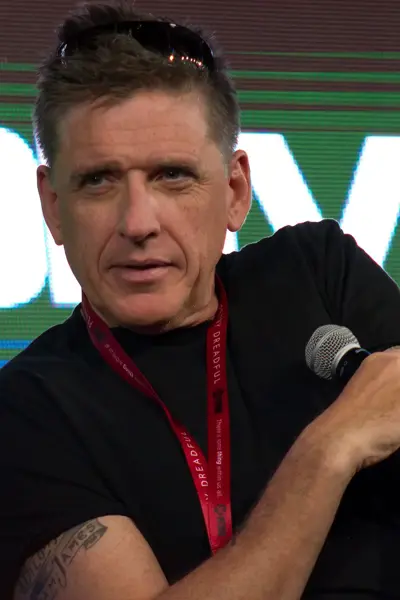
Craig Ferguson is a Scottish-born American television host, comedian, author, and actor, best known for hosting the CBS late-night talk show The Late Late Show with Craig Ferguson (2005–14), for which he won a Peabody Award in 2009 for his interview with South African archbishop Desmond Tutu that year. He also hosted the syndicated game show Celebrity Name Game (2014–17), for which he won two Daytime Emmy Awards, and Join or Die with Craig Ferguson (2016) on History. In 2017 he released a six-episode web show with his wife, Megan Wallace Cunningham, titled Couple Thinkers.
